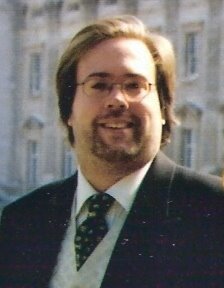
We have just had this press release about saxophonist Cyrille Oswald. The video is well worth watching.
On March 25,26 and 27, Cyrille Oswald will be presenting his new CD for Animal Music at the Jazz Dock in Prague, with David Doruzka on guitar, Tomas Liska on bass and Dano Soltis on drums.
Part of the show will consist of one of Cyrille's new projects, the Beautyists, a group of musicians, poets and storytellers.
On Thursday 25th, the quartet will be extended by percussionist and metalsculptor Steve Hubback, bassist Rodrigo Reijers and storyteller Tom Zahn. On Friday, poet/singer Lucien Zell will join the group, and on Saturday, both Tom Zahn and Lucien Zell will be present. Together they tell spellbinding tales from places nearby and far away, and make musical imagery of original poetry. They create a boundless experience between various artforms, prepared and improvised. There, they integrate the worlds of word and sound.
You can watch an interview with Cyrille about the CD here: http://www.youtube.com/watch?v=PMPqBTeYdB4
Showing posts with label David Dorůžka. Show all posts
Showing posts with label David Dorůžka. Show all posts
Thursday, March 25, 2010


Sunday, February 14, 2010
CD Review: Little Things

Jaromír Honzák Quintet
Animal Music / ANI013-2, 2009
Jaromír Honzák is arguably one of the overlooked stars of Czech jazz. When thinking of bassists or bandleaders his name rarely springs to the top of the pile, and yet there is no reason why it should not do so. He has put out five albums in his own name and he has regularly appeared on recordings by the Eben Brothers, Karel Růžička, Pavla Milcová and Iva Bittová. He studied at Berklee in 1989 and subsequently won several awards. He teaches in both Prague and Brno, and as well as doing session work he currently fronts two outfits: his more conventional Quartet/Quintet and the more modern Face Of The Bass. A busy guy then, and certainly worthy of recognition.
Little Things is the latest album from the Jaromír Honzák Quintet, released by Animal Music in 2009. His usual Quartet includes the two Poles Michal Tokaj (piano and Fender Rhodes) and Lukasz Zyta (drums), and the young Czech guitar star David Dorůžka. Here they are joined by American Chris Cheek on saxophones who, like Honzák and Dorůžka, also attended Berklee.
“Little Things” (J. Honzák) opens the album with a lilting piano introduction, underpinned by tinkling percussion, before bass and sax step in to fill out the sound. Although it is the latter that defines the shape there is a strong sense of melody in Honzák's playing. He is a measured and mature operator of his instrument. When he solos his fingers are capable of working into a fine flurry but still there is room within the phrasing for the music to breathe. Indeed the whole album has a strong organic feel about it, as if it was grown rather than recorded. Cheek dances around the top end, hitting a pleasing crescendo before the ensemble finishes off.
“The Cue” (J. Honzák) is a groovier track, with bubbling bass in the background that reflects Honzák's interest in modern forms of music. Complex rhythms and handclaps rattle away while the first solo is taken on Fender Rhodes, the second on sax. This most iconic of the electric pianos seems to be making a comeback in Czech jazz: the instrument used on Little Things was on loan from Beata Hlavenková! Dorůžka finally wakes up on this track, throwing in a clean, electric solo. It's a sweet sound, as opposed to a dirty blues note, with good technique.
“Friendly Space” (J. Honzák) begins with assorted percussive sounds and harsh noises. From this falls piano, and from this hangs a stepped melody led by sax and underpinned by bass played in unison. The weirdness and dissonance carries on underneath, even during the long bass and saxophone solos. Coming in at almost eleven minutes this is the longest track on the album but it is time well spent. The title is ironic. The space is uneasy rather than friendly, and you are thoroughly urged to listen to this track through headphones in total darkness.
“Clear” (J. Honzák) is a positive affair containing some pleasant electric guitar strumming and also a neat solo from Dorůžka. Zyta cuts loose towards the end. His presence on the album is more about subtlety than the wild stuff.
“Song for Albert” (D. Dorůžka) is the only composition on the album not written and arranged by the bassist. Dorůžka again takes a purposeful excursion during his solo spot. There is no doubting his ability but he is always so controlled, almost infuriatingly so. As good as his contributions are, and they are indeed good, it would be interesting to hear him really let rip like a maniac.
“Bystander's Story” (J. Honzák) features bowed bass and moody sax over choppy drums. The result is disjointed and a touch experimental while still being listenable. In contrast “Faraway” (J. Honzák) is a dreamy elegy of a piece, dripping in warmth and beauty.
The final track should win some sort of award for its title alone: “The Blues Of A String Hanging In The Wind” (J. Honzák). The string(s) in question appear to be the PKF String Quartet led by David Danel on 1st violin, and this piece is not what you might first expect. Solo piano explodes into a world of violent stabs and high tension, interspersed with mournful legato passages. The strings are fully integrated into the sound and not merely used as a backdrop. Cheek emerges and soars above before strings pick up and play out.
Little Things is a relatively short album, coming in at just over fifty minutes. Being honest there aren't many CD-filling recordings that contain more than fifty minutes of the really good stuff, and that is what we have here. Fifty minutes of really good stuff. The traditional combines with the unorthodox to produce an experience that keeps the listener's attention. Just when you think you know what this album is about it plays a joker like “Friendly Space” or the hanging string thing. For anyone who is interested in Czech jazz, but has yet to embrace the music vision of Jaromír Honzák, Little Things could be just the place to start.
Audio samples from this album can be found here.
Sunday, November 29, 2009
CD Review: Invisible World

Tomáš Liška
Animal Music / ANI 015-2, 2009
There are many new, younger artists currently making music on the Czech jazz scene, including bass player Tomáš Liška. He's a busy guy, appearing on recordings by the likes of Matej Benko, Nika Diamant and Radek Krampl. He also plays live alongside Lenka Dusilová in the Eternal Seekers, and with award-winning quartet Points. Now he has a solo album out, Invisible World, and it is something rather different.
Invisible World was recorded with a trio of Liška on bass, David Dorůžka on (mainly acoustic) guitars and Daniele di Bonaventura on bandoneón. To save you all a trip to Wikipedia, the bandoneón is a concertina-type instrument, invented in Germany but now associated with Argentinian dance bands. There are some additional contributions - Marta Topferova sings on one track and Tomáš Reindl plays percussion on two - but apart from that it is just the three of them making music together.
What they have created with Invisible World is an intricate and intimate album. The studio-recorded tracks have a live feel about them, but it is the feel of a fireside or a chamber concert rather than one played in a large hall. It is mellow and poignant, blending jazz with touches of folk, country and tango. Each note is played to be heard, not lost in a solid structure of sound. It's a contemplative album, with spacey arrangements that allow the music to breathe.
The first track, “Bonami” (T. Liška), gives a clear idea of what this album is about. Acoustic guitar picks at a clear, Latin-tinged melody, Liška plays tight and syncopated melodic bass, and di Bonaventura adds the drawl of bandoneón, occasionally running in unison with Dorůžka and occasionally taking the lead. The acoustically sensitive recording conveys the impression of music being created at close quarters: a clear sense of fingers pulling on strings and hitting buttons.
Liška is a strong presence on the album, occasionally going for the burn with a solo but mostly leading from the back. He's always working there, throwing in interesting patterns and tones, never settling for being pedestrian. The lack of a drummer means that it is often his work that keeps the beat and suggests structure. It also means that there is more space from him to manoeuvre as a one-man rhythm section, and so he can stretch out comfortably without being intrusive or clashing with anyone else at the low end. It is his bass patterns that keep driving things forward, emerging to provide extra emphasis and withdrawing when not required. It was a brave decision by the bassist to record like this, rather than with a conventional Trio or Quartet, but he handles it with style and maturity.
“Alegría en masca” (T. Liška) and “Silent Talking” (T. Liška) both feature Tomáš Reindl on tabla and udu, lending them even more of a "world music" feel. The former is a legato slice of yearning, and the use of sweet and simple electric guitar as well as percussion gives it a bigger band feel. The latter begins slower and simpler, very bass driven, with the other instruments echoing and complimenting the thick, twangy notes before rising up in elegant ensemble playing.
It is not all slow stuff on this album: “Nihemiah” (T. Liška) lifts the pace, and “Strade deserte a Praga” (D. di Bonaventura) is a brief (1:11) shimmering interlude. “River Way” (T. Liška) rolls along like its name suggests, and again features some good interplay between acoustic guitar and bandoneón. This device, rarely found on a a Czech jazz album, works as a lead instrument as well as being able to provide sharp chordal accompaniment and elongated washes of sound.
“Tierra de mis padres” (“The Land of my Parents”, T. Liška / M.Topferova) is complemented by brooding, breathy Spanish vocals from Marta Topferova. It reeks of Latin tragedy and the call of destiny: longing, sunsets, regrets, returning to home to die, the usual sort of stuff.
“Etheric Moments I.” (T. Liška) is the longest track and it brings the album to a fitting conclusion. It contains the same mix of sadness and celebration that permeates the whole recording. There are shifts in mood and theme, sometimes rich and sometimes sparse, sometimes gentle and sometimes dissonant, and it is perhaps the most musically challenging piece in this collection. The big-finish cliché is eschewed, the final bow consciously understated
In some respects this album is not what you would expect from a Czech jazz musician. Invisible World sounds more influenced by South America than by Central Europe, and while it contains strong jazz elements it not the most straightforward album to classify. It is pleasant music to have on in the background without offending anyone, but with close listening the fine details of craftsmanship make themselves known. Invisible World is also interesting, innovative, technically superior, and a satisfying listen. In that respect it is exactly what you would expect from a Czech jazz musician. For his début album Tomáš Liška has not taken the safe option. I, for one, like that.
Full track listing:
1."Bonami" (T. Liška)
2.“Colour For You” (T. Liška)
3.“Alegría en masca” (T. Liška)
4.“Silent Talking” (T. Liška)
5.“Nihemiah” (T.Liška)
6.“Tierra de mis padres” (T. Liška / M. Topferova)
7.“The Truth About Unspeakable Things” (T. Liška)
8.“River Way” (T. Liška)
9.“Strade deserte a Praga” (D.di Bonaventura)
10.“Forever Lost” (D.Dorůžka)
11.“Long Time Ago” (T. Liška)
12.“Etheric Moments I.” (T. Liška)
Free samples of this album can be found on both the Animal Music and the Tomáš Liška websites.
Subscribe to:
Posts (Atom)