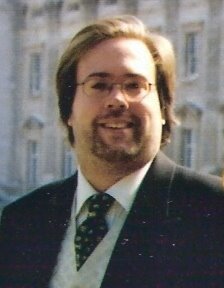
In March 2011 pianist Emil Viklický was interviewed by Detlaf A. Ott. The interview was translated into German and abridged slightly for publication in German magazine Jazz Podium. Emil very kindly sent us the original English transcript of the interview for publication on Prague Jazz.
Emil had previously recorded a concert in Leipzig, where this interview was done. It begins with Ott asking him about the recording if that album. Enjoy...
JP: One year ago you played an amazing concert with the English sax player Julian Nicholas. How does it sound to you today? Are you satisfied with the result?
EV: If you listen to the material immediately, let’s say in a week, you are too emotional to listen to the failure. After one month, or let’s say three months, listen to the material and if you still agree [that it is good] then it is probably good. If you hate it still after three months then it is bad. In this case – the concert in Leipzig - Julian and me, we chose about 65 minutes of good playing from the two hour concert for the CD.
JP: Can you tell me something about your collaboration with Julian Nicholas? When did it start? How did you get to know him? What do you think about him as a sax player?
EV: I know Julian for nearly twenty years. Back 1992-3 I was invited by the English Jazz Federation to be one of the tutors of the Welsh Jazz Society. I met Julian there. Then in 1994, when I was President of the Czech Jazz Society, I invited Julian Nicholas and drummer Dave Wickins to teach in the Czech Republic at a jazz workshop in Frýdlant . During our teaching we played together a lot and got the idea to record. The resulting CD is named after William Shakespeare, Food Of Love. It is interesting that this CD was already issued three times. The Melantrich company was bankrupt soon after they published the CD. They paid us peanuts. But I had the tapes and went with them to the Lotus company. That was the second printing. Julian had a friend in England at SYMBOL records. And so it was published there, too. Three different labels. I wonder which one will be the next…
Next month, on April 15, 2011 Julian and I will play at the Polička Jazz Festival, the city where Bohuslav Martinů was born, plus a few gigs in Prague and Olomouc. Julian is my kind of musician. He very much listens and can react very fast. There are so many great musicians around us who we don’t know. There is a bunch of incredible players in England and they are very little known. A classic example is the tenor saxophone player Bobby Wellins who was actually Julian´s teacher. He is now 75 years old. Practically nobody knows about him. Bobby is originally from Scotland. In the fifties he used to practise in London with Sonny Rollins, and after Rollins said “This is the best European saxophone player ever.” Sometimes the media will push the young musicians whether they are good or not and forget the old masters.
JP: I recognised that you played an Abdullah Ibrahim song in your concert. What is the tie to his music?
EV: Julian brought that song called “Wedding” in the afternoon before the concert in Leipzig. I met Abdullah once in Spain, at the Cadaques Jazz festival. Charismatic person. There is certain melodic sense in this South African music which is similar to old Moravian melodies. I talked to Moravian folklorist Zuzana Lapčíková - we did a few CDs together. She told me the “folkloristic” border cuts Europe in half and it goes down south. There are certain similarities between Hungarian and Turkish folk music, and this can go down as far as South Africa.
JP: What role will this new CD with Nicholas play in your immense discography?
EV: Of course doing such a CD here in Leipzig is something special. It is the town where Bach lived, Wagner was born, and Mendelssohn and Schumann worked.
JP: You’ve said Bach was a mathematician. What does Bach mean to you and what are your main influences in music beside folk music?
EV: Yes, that’s what I’m saying. J.S. Bach! When I’m listening to Bach I’m always amazed how incredible his compositions are. If he wasn't a musician he would have been somebody like G.W. Leibniz, a mathematician. Bach music is so well constructed. I listened to the Goldberg Variations this morning and wondered, “Why do we try to write something? The best things are already written.”
I guess in his time it was natural to improvise. We know the story when Kaiser Wilhelm invited him to play a newly constructed pianoforte in Potsdam. J.S. Bach improvised a fugue not only with three voices but with six voices on the theme given him by Emperor. In a way he must have had the ability that most jazz musicians are trying to have today, to improvise out of the moment. I think he could do that pretty well.
JP: Julian Nicholas wrote in the liner notes to your CD Food Of Love in 2001, “We share a common European experience of jazz music.” What does that mean?
EV: What that means is hard to say. Europeans usually have more interest in harmony and form, having on our shoulders that great tradition of classical music: Bach, Beethoven, Brahms, Wagner, Messiaen, Bartók, Janáček etc. American jazz players share a mainly rhythmical approach.
JP: What's the difference for you between playing in a trio or quartet with a rhythm section, and playing in a duo as you did with the Belgian sax player Steve Houben in 2009 or with Julian Nicholas. Is the work with only one partner more intensive?
EV: There is a big difference playing with a trio or quartet or in a duo. Playing in a duo you have to find a partner who can listen and respond. There are a lot of things that you can do only in a duo by closely following each other. Experience plays an important role in doing such things: to guess or intuitively expect what your partner will play.
To play with a rhythm section you have a completely different situation. You can’t expect that all of the four players will react similarly to some of the changes. Material used in trio or quartet must be more precisely structured.
JP: You’ve studied mathematics, left the science because of political reasons and became a jazz musician with SHQ. You then studied composition at Berklee in the 1970s. Why didn’t you decide to follow musicians like Jirí Mraz or Jan Hammer Jr. who left Czechoslovakia for the USA after 1968, or Jan Jankeje and Rudolf Dašek who played in West Germany?
EV: You asked me about my mathematical studies. Not long ago I joked and said, “I should be grateful to this communist rector of Mathematical Faculty.” When I finished in 1971 I wanted to play jazz. My thesis on “Symmetrical Polynomials” wasn’t bad at all, so I was recommended to do a doctorate in mathematics. And I said: “OK, I'll try.” After I finished my 5 years mathematical studies at Palacký University in Olomouc in 1971, I went with my thesis to visit the communist co-rector. He looked at me and shouted:” Viklický, I don’t care about your thesis. You want to have a doctorate, so you have to study Marxism-Leninism.” I didn’t say one word, took my papers, turned around and left the building. I haven’t been there since 1971.
In 1977-1978 I lived in the USA. In May 1978 I decided to stay there. Living in NYC, playing with Joe Newman, Ted Dunbar, Todd Capp and others was great. Mel Lewis told me: “Look Emil, if you stay here I can take you from September '78 as a member of my Thad Jones-Mel Lewis Big Band.” I said: “OK. I probably could do that.” In August 1978 I went back to see my family. After that, no more States. When Roland Hanna saw me playing in the club with Mel Lewis he came to me and said, “Hey, Emil. I thought you were a bass player.” I said, “Why?” “Because you always hang around with George Mraz.” He thought, he is Czech and so he must be a bass player. Sir Roland was surprised that I play piano. We sat down and chatted and I told him the difficulties about my decision. He said: “What’s the problem? Fuck the Communists. Stay here. I'll keep you busy. Don’t worry.” He liked my playing. Maybe I lost my career in the States, who knows?
JP: In his book Northern Sun | Southern Moon Mike Heffley called the Czech jazz musicians freelancing expatriates and not representatives of the official Czech scene. Where do you stand? Would you say that you represent your country and your roots, or does this mean nothing for a wide open mind like you?
EV: I was always trying to find my own way and expression - my own space. I realised that if I’m from Moravia why shouldn’t I find more influences from my heritage? I’m not a folk musician, but was trying to find what were sources of inspiration for Leoš Janáček (1854-1928), a Moravian composer that I admire. Janáček collected folk songs and used the “pattern of speech” method in his composition. When I recorded in New York with George Mraz and Billy Hart for the first time, in 2000, [the Morava album (Milestone/Fantasy MCD 9303)] the famous producer Todd Barkan suddenly said, “Now I know where George got that melodic sense from.” There is something of the Moravian melody in me, and of course also in George.
JP: You did an very interesting album, The Folk-Inspired Piano, on the Supraphon label.
EV: Yes, that’s my old one, before my stay in Berklee. When I was in the studio in 1977 to record the album somebody from the Ministry called and told that I was not allowed to go to the States. Antony Matzner - the producer - was so clever he didn’t tell me. He let me record and after he said to me, “Hey, Emil, on Monday I should have told you aren't allowed to go to USA.” But later on somehow they gave me the “stempel”.
JP: Years later you went back to the States. Recently you played a sold out concert at Dizzy’s with Mraz and Bittová and Moravian Gems. Why do you think your music so popular in the States? Does the Moravian inspiration make it exotic there?
EV: Probably. It was a sold out concert, twice. Both shows sold out, 19:30 and 21:30, 300 seats - simply incredible. And we were booked for a Monday date, January 3rd, 2011. Monday night is the worst one you can get. Of course on Friday, Saturday you can expect that it will be sold out at Dizzy´s. But not on Mondays. People came from everywhere: upstate New York, Connecticut, even from Boston, which is 300 miles away. They came to see the show. George Mraz had the 'flu, he couldn’t talk. So I was introducing the tunes we played. Dizzy’s is a wonderful place. From the concert grand Steinway you can look through those big windows down at Central Park and Columbus Circle. Very inspiring.
After that I played a duo with multi-instrumentalist Scott Robinson at the Bohemian National Hall, on 73rd Street. On YouTube you can find nearly all the songs we did.
JP: You studied composition at Berklee. How important is the relationship between composition and improvisation in your music? In a characteristic about Czech jazz Mike Heffley wrote: “…so the Czech jazz scene tended to foreground technically perfect composers-arrangers first, and technically brilliant improvisers only in the frameworks of those principles.” What is your point of view on this opinion?
EV: Well, who the hell is Mike Heffley? I don’t think he knows the scene well. He probably talked only to some Czech youngsters trying to sound like ECM. Or has seen some types of musicians who worked like that. But I think you can’t generalise musicians from a country in this way. I don’t work the way he describes. The part of improvisation in my music, e.g. with Julian Nicholas in Leipzig, is very important. Nearly nothing was prepared beforehand.
Czech composer Leoš Janáček used a compositional method he called “Pattern of Speech”. He listened to people talking, especially sentences they said with a lot of emotions. He notated these patterns down and used them later for composing. The classic example is in the third act of his opera Jenůfa. Mezzo-soprano “Kostelnička” sings the phrase: F♭ , F♭ , Eb♭ , D♭ , B♭. That is an absolutely typical jazz/blues phrase, but composed in 1900. Janáček couldn’t know anything about jazz. That brings me to another fact: Recently I just finished a piano concerto with full symphony orchestra - 25 minutes long. Somebody asked me, “Is this a “jazz concerto?”. I said, “No, I don’t think so.” I don’t really know what that means, a “jazz” or “non-jazz” motive. It is up to the musicologists to decide. I don’t really care whether this is jazz or not. It's just music.
JP: You wrote a composition for Wynton Marsalis with lyrics from Václav Havel. What is the story behind it?
EV: Legendary producer Todd Barkan recommended me for a Lincoln Center opening in October 2004 to write jazz melodrama for the Wynton Marsalis Big Band. Six different composers from the world were asked to write six jazz melodramas based on the texts of the world's leading politicians. My score The Mystery of Man used texts from former Czech president Václav Havel.
Todd called and asked me, “Emil, do you write for Big Bands?”. Of course, I studied in Berklee with Herb Pomeroy - only 15 students each year could study with him! – so we are small closed society of Herb Pomeroy´s students around the world. In the eighties I wrote charts for the Zurich Big Band, NDR (Norddeutsche Rundfunk), all the Czech Big Bands. I’m an experienced Big Band writer. Then there was a telephone conference with Wynton. He asked me a lot of questions and at the end he said, “Ok, do it.”
My melodrama The Mystery of Man got a few great reviews in the USA. What helped me tremendously was my operatic experience. In the period of 1999-2003 I wrote 3 full scale operas. My Phaedra was played in Berlin´s Unten den Linden opera house, my opera Ackermann und der Tod was played in Deutches Oper in Berlin as guest performance from Prague. My experience with writing the Ackermann und der Tod score helped me to write The Mystery of Man. I have discussed it with Václav Havel, we both agreed that I don’t need one narrator but two. When Mystery of Man was played in Prague later it was a big success, too. Perhaps, there will be another chance in Germany?
JP: As an old master who is looking back on deep experiences in jazz, how do you see the future of our culture? Discussions often go about the role of studying jazz at universities and less opportunities for young musicians to play jazz and get paid. How is the situation in your country?
EV: The Czech scene is not different to other countries. Young musicians have the tendency to go more to the commercial side. Jazz has something inside that I call the “self saving ability”. Jazz is able in certain moments to modify itself. We know that universities and music schools produce more and more musicians but there are no opportunities for them to play. Jazz is the type of music that has the improvisation in it, and such a music won’t die, I hope. Another characteristic of jazz is the spontaneity, which is mostly missing in contemporary classical music of today. You have very well trained contemporary musicians, technically impeccable. If the joy, happiness and spontaneity of jazz could mix with the contemporary classical music, this could lead to something special.
JP: Do you sometimes feel that you haven’t got enough of a reputation?
EV: It is hard to say. I am satisfied about what I did. I wrote a lot of film music, theatre music etc. Also I did music for the German TV series Ein Hamster im Nachthemd in Cologne. I was lucky to work with film cutter Miroslav Hajek who did all the early Miloš Forman movies. Mr Hajek liked me and recommended me for other movies, so I worked with high professionals. In America as a jazz piano player I would never have got the chance to get to the movies. I am grateful for that.
My last CD is on a Japanese Label VENUS Record.s It is a trio with Lewis Nash and George Mraz. The company is marketing it as The Janáček of Jazz. That’s an old title I was given by Chris Parker back in the 1997 in The Times, London. The Japanese writer Haruki Murakami is fascinated by Czech culture. He often speaks about Kafka and Janáček. That is how the producers decided to call me Janáček of Jazz. And now I’m selling CDs in Japan quite well. That’s crazy. Last year I played a solo piano concert in Tokyo, and Murakami came. He usually doesn’t go out in public. Very, very seldom. My next record in Japan will be a tribute to Murakami.
JP: What are you planning to do next?
EV: This month I have a short tour with Steve Houben, next month – April 2011 – I will play with Julian Nicholas again. With Richie Cole I will play a few concerts in Chicago in May and some festivals in Europe.
JP: A last question. What is the CD title?
EV: At first I thought about Mood Indigo because we destroyed this Duke´s tune so beautifully in a kind of Thelonius Monk-ish way. A friend of mine, painter Jiří Anderle, has a picture called Spring Frenzy. Our concert was on March , it couldn’t be better description of the mood during that time. So, that´s it.
Showing posts with label Interview. Show all posts
Showing posts with label Interview. Show all posts
Wednesday, July 20, 2011


Sunday, July 3, 2011
Interview: Rene Trossman
There are two sorts of blues fans in Prague: those who go and see Rene Trossman and those who should. His is the sound of authentic Chicago blues, coming from an authentic Chicago heart. It was there that Rene played the clubs for a decade before moving to Europe and settling in Prague. He is known not only for his slick guitar sound and raw voice but also for his frankness and honesty: Rene tells it how he sees it, and this is how he sees it...
PJ: What was the Prague scene like when you arrived?
RT: Much more “transient”, and I refer to both the expat populations as well as the venues. In the nineties it was a lot easier in many ways, bureaucracy aside, to try almost anything, and people did. This applies to music as well. I remember “creating” venues in existing places that previously never had music. Walk in, hey do you want live music? Yeah, maybe!
PJ: What changes have you seen, for better and for worse?
RT: A huge increase in the number of quality musicians would be the main “for better”. Also, the jazz scene itself has become a lot more “sophisticated” and the blues scene, well, it “became”... Now, there are some incredible guys playing here, guys who are at an International Level and could play anywhere.
As far as the “for worse”, we could do a separate interview for that some day. In an effort to be concise here, I will limit my response to this with one specific “for worse” examples, that being musicians' wages.
Somehow, in spite of the fact that virtually everything costs a lot more today in Praha than in the nineties, musicians' wages are stuck in some sort of time warp. Granted, there are the exceptions that prove the rule and I don’t want this to be an overall indictment of all venues in the country, but, in general, the wages for musicians have not kept pace with all of the other increases. I receive offers that echo the nineties, and in many cases I can distinctly remember actually being better compensated back then! More recently I’ve played private parties where the shrimp table at the buffet costs more than what they were paying the band.
The result of this has been that a lot of the best musicians are sitting at home, because they don’t want to be taken advantage of and exploited, while owners make a profit from their talent. Even worse is the collateral damage, the programmes are now filled with those musicians who ARE willing to play for such insultingly pitiful terms.
The real losers? The paying public. What I do “get” is this: Typical venue here: 150-200Kč tickets, 40-80Kč beers, t-shirts for 200Kč, and for the band? It’s back to the nineties! Or some crappy offer a “door-deal” for a percentage of tickets sold, which if any type of promotion were to be done might be “alright”.
PJ: Who are the people you’ve enjoyed playing with most, both locals and international musicians?
RT: Locally, there are a few guys that I have played with, in various incarnations, for a long time. The Hammond Organ player, Jan Kořínek, drummer Martin Kopřiva, bassist Taras Voloshchuk (UKR), drummer Martin Šulc, and guitarist Jirka Hokeš are the guys here that I’ve known the longest and have worked with the most over the years. I continue to have musical connections to all of them in one form or another today.
Internationally, the blues man Mr. Eb Davis from Memphis, now living in Berlin. Eb and I have done a lot of things together over the years, including recording a CD with Jan Kořínek and Martin Kopřiva. A blues singer from Chicago, Mr. Lorenzo Thompson has also done a lot here, again including a CD with the same cats mentioned above.
More recently I had the privilege of working here with Miss Deitra Farr, an incredible blues singer from Chicago, and also recently we had the timeless wonder here, a blues guitarist and vocalist, Mr. Chick Willis from Atlanta, who did a tour here with us a couple of years ago at age 74. I learned a lot from all of these great people and had a lot of fun too.
PJ: When you are performing what gives you the most satisfaction?
Tricky topic here Tony! Naturally I want go out there each and every time and be better than the last time, and simply do the best I can, whether it is for 5 people or for 500 people. I try to do my thing in an honest way, and “do it like I mean it” every time. This being the goal, it is not always possible to achieve it every single time out.
Having said that, most of the time I am my own worst critic and have received compliments on nights when I did not think that it was warranted, and conversely there have been nights where I thought we really tore it up and not a word. The thing between the band and its public, it’s like the classic “chicken or the egg” argument of which came first. A band can get a lot of energy from their audiences, however it also necessary for a band to give energy to the audience, in order to receive any energy back from them.
Now I can actually answer your question and you may perhaps better understand this answer now that I have provided the “back-drop” to it. I’d say that when I am performing the most satisfying thing that happens is when someone tells me, “I don’t know anything about blues or have any blues CDs, but I loved the concert tonight.” The other is when someone says, “Hey, I also play blues in a band, back at home, and I really enjoyed your gig.” Everyone else seems to fall into some “middle” category, so to speak.
PJ: Where do you find the inspiration for your own songs?
From my own life and experiences mostly. I sometimes joke about a certain song I do as being from “The angry period” and another about being written “After she dumps you for the second time”. Of course as with a lot of writing, there is a certain amount of “poetic license” granted. So, if you ever hear me singing about killing someone or some other unreal scenario, be sure, I am using that license!
PJ: What advice would you give arriving musicians who want to break into the Czech scene?
RT: Be realistic. Disappointments will be the result of your own expectations, and how realistically these two things line up. Visit the scene, evaluate it and your own expectations in order to decide if they should in fact choose Prague. Tony, two things here, NOBODY gets into the jazz/blues music business, ANYWHERE, for the purposes of making any actual money, and secondly, I would not list Prague as a place where someone is going to become “famous” or renown in the fields of jazz or blues. There it is, the plain and simple truth.
I would like to say here that I do NOT live in Prague, nor did I choose to live here, because of the “music scene” here. Yes, there are opportunities to play, it is one of the collateral advantages of living in high-tourist city such as Praha. The key word being “opportunities” As to the quality of these opportunities and what rewards they offer, again, this is the expectations part.
The fact is, doing what I do, I can do it almost anywhere in the world that I choose to do it. I happen to enjoy living in Praha. After all, we all live in a place more than we play (work) in it. I can travel all around Europe to play, from Praha. I came here a lot of years ago and certainly did not ever plan on or even think I would stay as long as I have. Obviously if it did not suit me I would no longer still be here.
PJ: What are your current plans and ambitions?
RT: Currently, I am working on completing a new CD of all original compositions. Further on, I want to focus on booking festival appearances abroad. This is such a great way to reach a lot of people in one moment, and affords a lot of great new opportunities to return somewhere in the future as a result.
My ambitions are to quit smoking and attain Nirvana. That is all Tony, thank you.
And many thanks to Rene for his time and this thoughts. You can visit Rene at his website - www.renetrossman.com - and see him in action at the end of July:
JULY 26 - Jazz Dock
JULY 27 - U Malého Glena
JULY 28 - Blues Sklep
JULY 30 - U Malého Glena
And finally here is the official video for one of Rene's songs, "My Endless Blue Mood", featung his band and filmed at U Malého Glena.
PJ: What was the Prague scene like when you arrived?
RT: Much more “transient”, and I refer to both the expat populations as well as the venues. In the nineties it was a lot easier in many ways, bureaucracy aside, to try almost anything, and people did. This applies to music as well. I remember “creating” venues in existing places that previously never had music. Walk in, hey do you want live music? Yeah, maybe!
PJ: What changes have you seen, for better and for worse?
RT: A huge increase in the number of quality musicians would be the main “for better”. Also, the jazz scene itself has become a lot more “sophisticated” and the blues scene, well, it “became”... Now, there are some incredible guys playing here, guys who are at an International Level and could play anywhere.
As far as the “for worse”, we could do a separate interview for that some day. In an effort to be concise here, I will limit my response to this with one specific “for worse” examples, that being musicians' wages.
Somehow, in spite of the fact that virtually everything costs a lot more today in Praha than in the nineties, musicians' wages are stuck in some sort of time warp. Granted, there are the exceptions that prove the rule and I don’t want this to be an overall indictment of all venues in the country, but, in general, the wages for musicians have not kept pace with all of the other increases. I receive offers that echo the nineties, and in many cases I can distinctly remember actually being better compensated back then! More recently I’ve played private parties where the shrimp table at the buffet costs more than what they were paying the band.
The result of this has been that a lot of the best musicians are sitting at home, because they don’t want to be taken advantage of and exploited, while owners make a profit from their talent. Even worse is the collateral damage, the programmes are now filled with those musicians who ARE willing to play for such insultingly pitiful terms.
The real losers? The paying public. What I do “get” is this: Typical venue here: 150-200Kč tickets, 40-80Kč beers, t-shirts for 200Kč, and for the band? It’s back to the nineties! Or some crappy offer a “door-deal” for a percentage of tickets sold, which if any type of promotion were to be done might be “alright”.
PJ: Who are the people you’ve enjoyed playing with most, both locals and international musicians?
RT: Locally, there are a few guys that I have played with, in various incarnations, for a long time. The Hammond Organ player, Jan Kořínek, drummer Martin Kopřiva, bassist Taras Voloshchuk (UKR), drummer Martin Šulc, and guitarist Jirka Hokeš are the guys here that I’ve known the longest and have worked with the most over the years. I continue to have musical connections to all of them in one form or another today.
Internationally, the blues man Mr. Eb Davis from Memphis, now living in Berlin. Eb and I have done a lot of things together over the years, including recording a CD with Jan Kořínek and Martin Kopřiva. A blues singer from Chicago, Mr. Lorenzo Thompson has also done a lot here, again including a CD with the same cats mentioned above.
More recently I had the privilege of working here with Miss Deitra Farr, an incredible blues singer from Chicago, and also recently we had the timeless wonder here, a blues guitarist and vocalist, Mr. Chick Willis from Atlanta, who did a tour here with us a couple of years ago at age 74. I learned a lot from all of these great people and had a lot of fun too.
PJ: When you are performing what gives you the most satisfaction?
Tricky topic here Tony! Naturally I want go out there each and every time and be better than the last time, and simply do the best I can, whether it is for 5 people or for 500 people. I try to do my thing in an honest way, and “do it like I mean it” every time. This being the goal, it is not always possible to achieve it every single time out.
Having said that, most of the time I am my own worst critic and have received compliments on nights when I did not think that it was warranted, and conversely there have been nights where I thought we really tore it up and not a word. The thing between the band and its public, it’s like the classic “chicken or the egg” argument of which came first. A band can get a lot of energy from their audiences, however it also necessary for a band to give energy to the audience, in order to receive any energy back from them.
Now I can actually answer your question and you may perhaps better understand this answer now that I have provided the “back-drop” to it. I’d say that when I am performing the most satisfying thing that happens is when someone tells me, “I don’t know anything about blues or have any blues CDs, but I loved the concert tonight.” The other is when someone says, “Hey, I also play blues in a band, back at home, and I really enjoyed your gig.” Everyone else seems to fall into some “middle” category, so to speak.
PJ: Where do you find the inspiration for your own songs?
From my own life and experiences mostly. I sometimes joke about a certain song I do as being from “The angry period” and another about being written “After she dumps you for the second time”. Of course as with a lot of writing, there is a certain amount of “poetic license” granted. So, if you ever hear me singing about killing someone or some other unreal scenario, be sure, I am using that license!
PJ: What advice would you give arriving musicians who want to break into the Czech scene?
RT: Be realistic. Disappointments will be the result of your own expectations, and how realistically these two things line up. Visit the scene, evaluate it and your own expectations in order to decide if they should in fact choose Prague. Tony, two things here, NOBODY gets into the jazz/blues music business, ANYWHERE, for the purposes of making any actual money, and secondly, I would not list Prague as a place where someone is going to become “famous” or renown in the fields of jazz or blues. There it is, the plain and simple truth.
I would like to say here that I do NOT live in Prague, nor did I choose to live here, because of the “music scene” here. Yes, there are opportunities to play, it is one of the collateral advantages of living in high-tourist city such as Praha. The key word being “opportunities” As to the quality of these opportunities and what rewards they offer, again, this is the expectations part.
The fact is, doing what I do, I can do it almost anywhere in the world that I choose to do it. I happen to enjoy living in Praha. After all, we all live in a place more than we play (work) in it. I can travel all around Europe to play, from Praha. I came here a lot of years ago and certainly did not ever plan on or even think I would stay as long as I have. Obviously if it did not suit me I would no longer still be here.
PJ: What are your current plans and ambitions?
RT: Currently, I am working on completing a new CD of all original compositions. Further on, I want to focus on booking festival appearances abroad. This is such a great way to reach a lot of people in one moment, and affords a lot of great new opportunities to return somewhere in the future as a result.
My ambitions are to quit smoking and attain Nirvana. That is all Tony, thank you.
And many thanks to Rene for his time and this thoughts. You can visit Rene at his website - www.renetrossman.com - and see him in action at the end of July:
JULY 26 - Jazz Dock
JULY 27 - U Malého Glena
JULY 28 - Blues Sklep
JULY 30 - U Malého Glena
And finally here is the official video for one of Rene's songs, "My Endless Blue Mood", featung his band and filmed at U Malého Glena.
Interview: Ondřej Pivec
When the Prague Jazz website started one of the most exciting emerging musicians on the local scene was organist Ondřej Pivec. He had that star quality: a young player with technical skill but also a young writer with something to say in his music. He was clearly one of the guys who was going to “make it”, and it was only a matter of time before he headed out into the world to expand his horizons and his musical vocabulary.
Here we catch up with Ondřej’s story in the “city that never sleeps”. No, not Brno. New York, New York.
PJ: Why did you decide to go to NYC and how do you like it there?
OP: The primary idea was to go for about half a year, take lessons, play sessions with people and get better at playing jazz music. From today's point of view it seems like quite a silly idea, as I see that the real learning process takes years or even decades, if you want the outcome to have some kind of value. So overall I really love it - I get to learn so many new things I would never have in Prague.
PJ: How does the NYC scene compare with the Czech scene?
OP: Well, speaking from a jazz perspective, the difference is mainly in the fact that there are more people. So there are more good musicians, more great musicians and more bad musicians. More places to play at, more people to come and listen to etc. which creates a highly competitive environment and therefore a greater level of music. Also, if you are great at what you're doing, there is a chance for you become a member of or play with world renowned bands, which consist of major headliners or as I like to call them "jazz superstars". The prospect of playing with truly amazing musicians keeps everyone motivated and this is something that is unlikely to happen in Prague due to the scale of our jazz community.
Another factor that plays into this is the plethora of musical styles in NYC - something that almost doesn't exist in the Czech Republic. I am very slowly entering the gospel and RnB scene - only realizing the stereotype that "jazz musicians can play everything" is really really off. Especially in today's jazz music scene, when there is not much stress being put on stylistic accuracy and everything is played so "open".
PJ: What do you miss most about playing here, and what is the most enjoyable about playing in NYC?
OP: Well, when I was leaving at the end of 2008, Organic Quartet was in a very good shape and just finally taking off internationally. So it felt a bit sad - after six years of working on a project and leaving it just when the efforts start to pay off. But, I felt a strong need to learn much more about music and the best way I thought to accomplish that would be in NYC, where I would expose myself to new situations, which could lead to great musical learning experience. And that's what I love the most about being in New York - it keeps you on your toes and if you're open to it, you can learn something new every day.
PJ: What are your current projects?
OP: Besides playing for a Harlem gospel church every Sunday, I play every Wednesday at a war veterans' club with a be-bop trio of Jason Marshall (Roy Hargrove's baritone saxophonist) and I've also formed two new projects. One is a funk/fusion trio called CPR (http://www.cprelectrio.com/) and my second project is with an R'n'B cover band (http://www.bandwithoutaband.com/). I am very excited about both groups.
PJ: What are your long term ambitions and plans?
OP: I would love to be musically as versatile as possible, because that allows you to work on many different projects. Soon I want to start writing music again, which I haven't done for nearly two years. Because I took a break to absorb some of the new music I'm being exposed to. It's a never ending process; it seems to me that I'll just have "creative" and "absorbing" eras in my life.
PJ: Do you think you will ever return to CZ permanently?
OP: Currently I see my future here in New York, but like they say: "Never say never"...
PJ: Do you have any suggestions for young musicians who contemplate going abroad for getting more experience?
OP: Yes - do it! Being abroad forces you to adjust to and understand completely different mentalities and cultures, so you begin to understand that your point of view, no matter how strong and valid it is, is just one of many equally valid ones. And the lessons you learn from those experiences are invaluable.
PJ: Is there anything you miss from the Czech Republic that is unavailable in NYC (can be anything, food, things, events, people...)?
OP: I definitely miss my close friends and family members. Sometimes I wouldn't mind having a plate of svíčková or a baked duck witch cabbage and dumplings. Thankfully, they just opened a very good Czech restaurant on the Upper East side of Manhattan a week ago, which I plan to visit every once in a while for a memory of home.
Many thanks to Ondřej for taking the time to talk to us. Best wishes from Prague – we hope to see you here again soon. You can keep up with Ondřej’s work at his website - http://ondrejpivec.com/ - and here’s a clip of him in action. Enjoy!
Here we catch up with Ondřej’s story in the “city that never sleeps”. No, not Brno. New York, New York.
PJ: Why did you decide to go to NYC and how do you like it there?
OP: The primary idea was to go for about half a year, take lessons, play sessions with people and get better at playing jazz music. From today's point of view it seems like quite a silly idea, as I see that the real learning process takes years or even decades, if you want the outcome to have some kind of value. So overall I really love it - I get to learn so many new things I would never have in Prague.
PJ: How does the NYC scene compare with the Czech scene?
OP: Well, speaking from a jazz perspective, the difference is mainly in the fact that there are more people. So there are more good musicians, more great musicians and more bad musicians. More places to play at, more people to come and listen to etc. which creates a highly competitive environment and therefore a greater level of music. Also, if you are great at what you're doing, there is a chance for you become a member of or play with world renowned bands, which consist of major headliners or as I like to call them "jazz superstars". The prospect of playing with truly amazing musicians keeps everyone motivated and this is something that is unlikely to happen in Prague due to the scale of our jazz community.
Another factor that plays into this is the plethora of musical styles in NYC - something that almost doesn't exist in the Czech Republic. I am very slowly entering the gospel and RnB scene - only realizing the stereotype that "jazz musicians can play everything" is really really off. Especially in today's jazz music scene, when there is not much stress being put on stylistic accuracy and everything is played so "open".
PJ: What do you miss most about playing here, and what is the most enjoyable about playing in NYC?
OP: Well, when I was leaving at the end of 2008, Organic Quartet was in a very good shape and just finally taking off internationally. So it felt a bit sad - after six years of working on a project and leaving it just when the efforts start to pay off. But, I felt a strong need to learn much more about music and the best way I thought to accomplish that would be in NYC, where I would expose myself to new situations, which could lead to great musical learning experience. And that's what I love the most about being in New York - it keeps you on your toes and if you're open to it, you can learn something new every day.
PJ: What are your current projects?
OP: Besides playing for a Harlem gospel church every Sunday, I play every Wednesday at a war veterans' club with a be-bop trio of Jason Marshall (Roy Hargrove's baritone saxophonist) and I've also formed two new projects. One is a funk/fusion trio called CPR (http://www.cprelectrio.com/) and my second project is with an R'n'B cover band (http://www.bandwithoutaband.com/). I am very excited about both groups.
PJ: What are your long term ambitions and plans?
OP: I would love to be musically as versatile as possible, because that allows you to work on many different projects. Soon I want to start writing music again, which I haven't done for nearly two years. Because I took a break to absorb some of the new music I'm being exposed to. It's a never ending process; it seems to me that I'll just have "creative" and "absorbing" eras in my life.
PJ: Do you think you will ever return to CZ permanently?
OP: Currently I see my future here in New York, but like they say: "Never say never"...
PJ: Do you have any suggestions for young musicians who contemplate going abroad for getting more experience?
OP: Yes - do it! Being abroad forces you to adjust to and understand completely different mentalities and cultures, so you begin to understand that your point of view, no matter how strong and valid it is, is just one of many equally valid ones. And the lessons you learn from those experiences are invaluable.
PJ: Is there anything you miss from the Czech Republic that is unavailable in NYC (can be anything, food, things, events, people...)?
OP: I definitely miss my close friends and family members. Sometimes I wouldn't mind having a plate of svíčková or a baked duck witch cabbage and dumplings. Thankfully, they just opened a very good Czech restaurant on the Upper East side of Manhattan a week ago, which I plan to visit every once in a while for a memory of home.
Many thanks to Ondřej for taking the time to talk to us. Best wishes from Prague – we hope to see you here again soon. You can keep up with Ondřej’s work at his website - http://ondrejpivec.com/ - and here’s a clip of him in action. Enjoy!
Monday, May 30, 2011
Interview: Karel Růžička jr.
It could be an exaggeration to call two men a dynasty, but they're not far off. Two Karel Růžičkas, one father and one son, one pianist and one saxophonist, two masters of their craft. Růžička sr. is often seen in Prague but it is harder to catch Růžička jr. on this side of the Atlantic. However he will be coming over this summer for a series of shows that are sure to be unmissable, and to get you in the mood here is an interview with the man himself.
PJ: How did your father influence you in becoming a professional musician?
KRjr: In one word - profoundly. I owe my father a huge debt of gratitude for mentoring me and letting me hang around while he was practising and composing. Most of the things I have picked up by simply observing and at times by asking some annoying questions. He also took me to all the jazz festivals and big band rehearsals as a boy. I heard Sonny Rollins and Dexter Gordon before I could read, let alone spell their names. He had Kind of Blue, and Ballads by Trane, and many other records I was able to check out early on. I remember my dad torturing me with "Tune Up" by Miles - I was about 11 years old and played a trumpet at the time. I had to read the melody down and start to figure out the II-VI-I progressions of the tune before I was able to go to to get on my bike to play football in the park with the boys. I was still not sure if I am interested in music that much. After the usual phases of wanting to be a pilot, doctor and even train engineer I have succumbed to the siren call of the muse. And finally all the work has paid off when I fell in love with the saxophone and I never looked back. Thanks dad!
PJ: Who were the Czech jazz musicians who influenced you?
KRjr: Again I must say my father for most part. And all the cats I worked and hung with over the years - Standa Mácha, Jiří Slavíček , Robert Balzar, Najponk, Franta Kop, Štěpán Markovič - really all of them... I am very sorry if I left somebody out.
PJ: Why did you decide to move to the USA?
KRjr: Mainly my boundless curiosity and desire to learn and expand my horizons. At the time I felt I had already "made it" in Prague and whenever I saw any US musicians they encouraged me come overseas. Wynton Marsalis once told me "the only problem you have as a player is that you're not in NYC."
PJ: What is the NYC scene like compared to the Prague scene?
KRjr: There is not really a fair comparison, mainly because NYC is so diverse culturally and all the musicians gravitate towards it and Prague (and most of Europe except London and Paris) is very monocultural. Jazz is like a cultural gumbo and so is NYC. One very positive thing about the Prague scene is that the media attention and the general enthusiasm of the audience is much larger than in the US, where jazz is more on the fringes. It's definitely much easier for a talented artist to get attention of the media in Prague. It all comes down to supply and demand - here in NYC there are thousands of musicians competing for airplay on WBGO, the only mainly jazz radio station in NYC metro area. But in terms of new media, such as the internet and the satellite radio the sky is the limit, the playing field is levelled, and the game has just started a few years ago.
PJ: Do you have any plans to return to CZ?
KRjr: I am returning every year! I love Prague, but I also need to be in NYC with all the movers and shakers at the vanguard of the music. So I am not planning to be based in Prague permanently in the immediate future. But I find it important to keep coming often, maintain a presence and to give back. In mid July I will be teaching a Czech Jazz Workshop in Prague and play a number of dates with my dad and with my fellow Czech expat pianist Pavel Wlosok.
PJ: What are your current plans and ambitions?
KRjr: I am writing a bunch of music I plan to record and release later this year. Also with organist Ondřej Pivec and drummer Russell Carter we started a new group called [CPR] Electrio with influences ranging from jazz, funk to gospel. My long term ambition is to keep nurturing the jazz audience. We need to educate the future generations about this great and unique art form. There tends to be an unnecessary rivalry among various sub genres of jazz. It's important to keep studying the past while incorporating the best of the present. I believe we need to bring jazz into the 21st century and bridge the gap, where there is any, between the generations. Miles Davis and Herbie Hancock come to mind as the true masters of jazz who realised this almost 50 years ago. The music industry has changed dramatically over the past decade. My goal is to make the best of it now and pay it forward, so our kids can enjoy this great music as much as we do.
PJ: What are your best memories of playing in Prague?
KRjr: Oh gosh! There are so many of them... I am sure some of them I don't even remember! Here are just a few; Playing with The Four with Standa Macha, Petr Dvorský and Jirka Slavíček was so much fun. The gig with Roy Hargrove in 1996, when I was invited to sub for Ron Blake. All the gigs with my dad of course. Playing funk gigs with J.A.R. and Monkey Business and rocking out with Michal Pavlíček , Mirek Chyška and Lucie Bílá. Sitting in with my mentor Bob Mintzer and his quartet last year. All I can say is I am so happy and grateful to have all these memories and I am ready to make many more starting this summer.
Many thanks to Karel for taking the time to answer our questions. Do go and visit his websites - http://www.karelruzickajr.com/ and http://www.cprelectrio.com/ - and if you want to catch him in concert here's his current Euro gig diary (all are Karel sr. except the one with Pavel Wlosok):
15.7. - U maleho Glena (Fečo, Šulc)
22.7. - U maleho Glena with Pavel Wlosok
25.7.- Jazz Dock (Fečo, Dano Šoltys)
28.7. - La Boca (my dva duo) gastrojazz
30.7. - Tábor (Kořínek, Smažík)
3.8. - Augsburg (Stock, Bittner)
5.8. - Jazz Dock (Fečo, Šulc)
For our US-based readers you can also catch Karel at any of the following gigs:
June 8 - Sugar Bar in New York, NY [CPR] Electrio
June 24 - The Fillmore, Charlotte NC with Michael Franks
July 8-10 - Yoshi's, Oakland, CA with Michael Franks
August 12 - Aliante Casino, Las Vegas NV with Michael Franks
August 13 - Long Beach Jazz Festival, Long Beach CA with Michael Franks
And finally, some music. Here's a clip of Karel playing one of his own compositions with his dad on piano. Enjoy!
PJ: How did your father influence you in becoming a professional musician?
KRjr: In one word - profoundly. I owe my father a huge debt of gratitude for mentoring me and letting me hang around while he was practising and composing. Most of the things I have picked up by simply observing and at times by asking some annoying questions. He also took me to all the jazz festivals and big band rehearsals as a boy. I heard Sonny Rollins and Dexter Gordon before I could read, let alone spell their names. He had Kind of Blue, and Ballads by Trane, and many other records I was able to check out early on. I remember my dad torturing me with "Tune Up" by Miles - I was about 11 years old and played a trumpet at the time. I had to read the melody down and start to figure out the II-VI-I progressions of the tune before I was able to go to to get on my bike to play football in the park with the boys. I was still not sure if I am interested in music that much. After the usual phases of wanting to be a pilot, doctor and even train engineer I have succumbed to the siren call of the muse. And finally all the work has paid off when I fell in love with the saxophone and I never looked back. Thanks dad!
PJ: Who were the Czech jazz musicians who influenced you?
KRjr: Again I must say my father for most part. And all the cats I worked and hung with over the years - Standa Mácha, Jiří Slavíček , Robert Balzar, Najponk, Franta Kop, Štěpán Markovič - really all of them... I am very sorry if I left somebody out.
PJ: Why did you decide to move to the USA?
KRjr: Mainly my boundless curiosity and desire to learn and expand my horizons. At the time I felt I had already "made it" in Prague and whenever I saw any US musicians they encouraged me come overseas. Wynton Marsalis once told me "the only problem you have as a player is that you're not in NYC."
PJ: What is the NYC scene like compared to the Prague scene?
KRjr: There is not really a fair comparison, mainly because NYC is so diverse culturally and all the musicians gravitate towards it and Prague (and most of Europe except London and Paris) is very monocultural. Jazz is like a cultural gumbo and so is NYC. One very positive thing about the Prague scene is that the media attention and the general enthusiasm of the audience is much larger than in the US, where jazz is more on the fringes. It's definitely much easier for a talented artist to get attention of the media in Prague. It all comes down to supply and demand - here in NYC there are thousands of musicians competing for airplay on WBGO, the only mainly jazz radio station in NYC metro area. But in terms of new media, such as the internet and the satellite radio the sky is the limit, the playing field is levelled, and the game has just started a few years ago.
PJ: Do you have any plans to return to CZ?
KRjr: I am returning every year! I love Prague, but I also need to be in NYC with all the movers and shakers at the vanguard of the music. So I am not planning to be based in Prague permanently in the immediate future. But I find it important to keep coming often, maintain a presence and to give back. In mid July I will be teaching a Czech Jazz Workshop in Prague and play a number of dates with my dad and with my fellow Czech expat pianist Pavel Wlosok.
PJ: What are your current plans and ambitions?
KRjr: I am writing a bunch of music I plan to record and release later this year. Also with organist Ondřej Pivec and drummer Russell Carter we started a new group called [CPR] Electrio with influences ranging from jazz, funk to gospel. My long term ambition is to keep nurturing the jazz audience. We need to educate the future generations about this great and unique art form. There tends to be an unnecessary rivalry among various sub genres of jazz. It's important to keep studying the past while incorporating the best of the present. I believe we need to bring jazz into the 21st century and bridge the gap, where there is any, between the generations. Miles Davis and Herbie Hancock come to mind as the true masters of jazz who realised this almost 50 years ago. The music industry has changed dramatically over the past decade. My goal is to make the best of it now and pay it forward, so our kids can enjoy this great music as much as we do.
PJ: What are your best memories of playing in Prague?
KRjr: Oh gosh! There are so many of them... I am sure some of them I don't even remember! Here are just a few; Playing with The Four with Standa Macha, Petr Dvorský and Jirka Slavíček was so much fun. The gig with Roy Hargrove in 1996, when I was invited to sub for Ron Blake. All the gigs with my dad of course. Playing funk gigs with J.A.R. and Monkey Business and rocking out with Michal Pavlíček , Mirek Chyška and Lucie Bílá. Sitting in with my mentor Bob Mintzer and his quartet last year. All I can say is I am so happy and grateful to have all these memories and I am ready to make many more starting this summer.
Many thanks to Karel for taking the time to answer our questions. Do go and visit his websites - http://www.karelruzickajr.com/ and http://www.cprelectrio.com/ - and if you want to catch him in concert here's his current Euro gig diary (all are Karel sr. except the one with Pavel Wlosok):
15.7. - U maleho Glena (Fečo, Šulc)
22.7. - U maleho Glena with Pavel Wlosok
25.7.- Jazz Dock (Fečo, Dano Šoltys)
28.7. - La Boca (my dva duo) gastrojazz
30.7. - Tábor (Kořínek, Smažík)
3.8. - Augsburg (Stock, Bittner)
5.8. - Jazz Dock (Fečo, Šulc)
For our US-based readers you can also catch Karel at any of the following gigs:
June 8 - Sugar Bar in New York, NY [CPR] Electrio
June 24 - The Fillmore, Charlotte NC with Michael Franks
July 8-10 - Yoshi's, Oakland, CA with Michael Franks
August 12 - Aliante Casino, Las Vegas NV with Michael Franks
August 13 - Long Beach Jazz Festival, Long Beach CA with Michael Franks
And finally, some music. Here's a clip of Karel playing one of his own compositions with his dad on piano. Enjoy!
Monday, April 25, 2011
Interview: Julian Nicholas
If you went to see the Emil Viklický Trio in April you may have noticed that there were in fact four musicians on stage. This was because Emil had a special guest with him, saxophonist Julian Nicholas. Julian kindly took the time to tell Prague Jazz a little about his experiences with Emil and the Czech jazz scene. We started by asking him how he first met one of the legends of Central European jazz...
“I met Emil in Wales. We were both teaching on a Jazz Summer School and played in the 'club' in the evenings, finding a mutuality in our music that could be said to emerge from 'folk'-ish expression, and perhaps a Jarret-Gabarek ECM background. Emil invited the drummer David Wickins and myself to come and teach on the Frydlant Jazz School and play some gigs.
“My greatest regret over the years is that I haven't been able to reciprocate with engagements in the UK the kind of situations that Emil has set up for so many of us in the Czech Republic, but next year I will be freer to promote myself in the UK and work towards making things happen for us there too. Last year we recorded a duo concert in Leipzig, and I believe the promoter may be open to the idea of us forming an international quartet there next time, but generally the plans are improvised like the music. Opportunity provides...
The Czech jazz scene not only has a significant heritage of world class artists, but continues to produce them through inspiring young players to go to college and gig a wide range of styles. However, it would be foolish to pretend that it doesn't suffer from all the same syndromes as every jazz scene the world over: clubs with a reputation and tourist interest not paying enough or knowing or caring enough, no real media coverage or airtime, no record company or publisher business development support, and film and television companies not distinguishing between the real thing and potted clichés. Therefore musicians are forced to exist in cliques or sub-scenes, often pressured to compete with one another instead of pooling resources and working together to combat the anti-jazz exploitative capitalism of the media, some clubs, and the so-called “commercial music scene”. But the upside is that there is, deep down, in most of Europe, Scandinavia, Japan and the United States, a culture of respect for the artistic endeavours and heritage of the Jazz Artist that hasn't survived in mainstream culture in the UK. It still exists in the Czech Republic.
“For example, on Friday we played at the festival in Polička, a small town that has hosted jazz musicians annually for 15 years, and has consequently enriched its local people with a greater understanding of the wide range of music under the jazz umbrella, bringing them together in a unique and very different atmosphere than 'pop' and classical musics can achieve.
“My memories of playing in the Czech Republic are rich with magic moments, like recording our album Food Of Love in the atmospheric orchestral [Český rozhlas] broadcasting Studio A in Karlín, all the times Emil has brought together truly individual players from the Czech scene and internationals like Steve Houben and Scott Robinson for tours or the gig at the Castle, and playing Emil's home town gig Olomouc and feeling 'spoilt' by the level of attention. Many more to come, I'm sure...”
Many thanks to Julian for his time and thoughts, and we look forward to seeing him in Prague again soon. For those of you who didn't get to see him play here's a treat – an “official bootleg” video of him in action recorded from the top of Emil's piano at the Polička Jazz Festival. The band are playing one of Julian's own pieces, "1000 Ships".
“I met Emil in Wales. We were both teaching on a Jazz Summer School and played in the 'club' in the evenings, finding a mutuality in our music that could be said to emerge from 'folk'-ish expression, and perhaps a Jarret-Gabarek ECM background. Emil invited the drummer David Wickins and myself to come and teach on the Frydlant Jazz School and play some gigs.
“My greatest regret over the years is that I haven't been able to reciprocate with engagements in the UK the kind of situations that Emil has set up for so many of us in the Czech Republic, but next year I will be freer to promote myself in the UK and work towards making things happen for us there too. Last year we recorded a duo concert in Leipzig, and I believe the promoter may be open to the idea of us forming an international quartet there next time, but generally the plans are improvised like the music. Opportunity provides...
The Czech jazz scene not only has a significant heritage of world class artists, but continues to produce them through inspiring young players to go to college and gig a wide range of styles. However, it would be foolish to pretend that it doesn't suffer from all the same syndromes as every jazz scene the world over: clubs with a reputation and tourist interest not paying enough or knowing or caring enough, no real media coverage or airtime, no record company or publisher business development support, and film and television companies not distinguishing between the real thing and potted clichés. Therefore musicians are forced to exist in cliques or sub-scenes, often pressured to compete with one another instead of pooling resources and working together to combat the anti-jazz exploitative capitalism of the media, some clubs, and the so-called “commercial music scene”. But the upside is that there is, deep down, in most of Europe, Scandinavia, Japan and the United States, a culture of respect for the artistic endeavours and heritage of the Jazz Artist that hasn't survived in mainstream culture in the UK. It still exists in the Czech Republic.
“For example, on Friday we played at the festival in Polička, a small town that has hosted jazz musicians annually for 15 years, and has consequently enriched its local people with a greater understanding of the wide range of music under the jazz umbrella, bringing them together in a unique and very different atmosphere than 'pop' and classical musics can achieve.
“My memories of playing in the Czech Republic are rich with magic moments, like recording our album Food Of Love in the atmospheric orchestral [Český rozhlas] broadcasting Studio A in Karlín, all the times Emil has brought together truly individual players from the Czech scene and internationals like Steve Houben and Scott Robinson for tours or the gig at the Castle, and playing Emil's home town gig Olomouc and feeling 'spoilt' by the level of attention. Many more to come, I'm sure...”
Many thanks to Julian for his time and thoughts, and we look forward to seeing him in Prague again soon. For those of you who didn't get to see him play here's a treat – an “official bootleg” video of him in action recorded from the top of Emil's piano at the Polička Jazz Festival. The band are playing one of Julian's own pieces, "1000 Ships".
Subscribe to:
Posts (Atom)