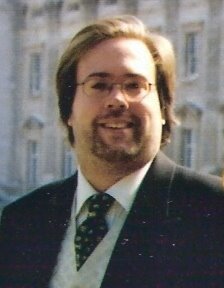
During the summer the Prague club stages were wowed by the combination of Karel Růžička senior (piano) and Karel Růžička junior (sax). Sadly they don't play together very often, but thanks to the miracle of YouTube we can relive the summer fun throughout the cold winter months. Here they are playing one of Růžička junior's compositions, "Seven Hills":
Showing posts with label Karel Růžička. Show all posts
Showing posts with label Karel Růžička. Show all posts
Thursday, October 29, 2009


Sunday, August 9, 2009
Gig Review: Karel Růžička Quartet feat. Karel Růžička jr.
Jazz Dock
2nd August 2009
I am very glad that they play different instruments and in different styles. Karel Růžička senior, a driving pianist, master of uneasy listening, caller down of the thunder. His son, Karen Růžička junior, a Grammy-nominated saxophonist, slick and soaring with lightening moves. Both incredibly talented, both writers, both arrangers, both charismatic onstage and off. But thankfully different: different enough that the awkward question of which of the two is better need not arise, and therefore the thoughtful listener is spared from making an arbitrary decision in order to tick a mental box. Like two fine spirits they are both intoxicating, both enjoyable. But mix them together in the right way, throw in a couple of extra ingredients, and let them shake it all up: jazz cocktail, jazz brilliance.
Růžička sr., award winner, composer, and former president of the Czech Jazz Society, can often be seeing playing in the jazz clubs of Prague with his Trio. His son is now based in New York City, a busy and acclaimed player on the local scene there. The two of them playing together is a special event, a fact reflected in the atmosphere at Jazz Dock. The rain was pouring down outside, a passing storm ripped the sky apart, but inside the purpose-built riverside venue there was even more of a buzz than usual.
Alongside the Karels the band comprised of Růžička sr.'s frequent collaborators, Josef Fečo on basses and Radek Němejc on drums: a tight unit of proficient musicians who know each other well. They played hard and with purpose, opening their account for the evening with a salvo of solos set into melodic group playing. That would be the format of the night, with the transitions between ensemble and individual sections always slick, always organic, never forced or clumsy.
Růžička jr.'s tenor sax work was spellbinding and clearly appreciated by the audience, who responded to his explorations spontaneously and enthusiastically. He is fast, very fast in fact, but never loses his sense of melody, never just burns for the sake of it. The tone he produces is rich and pleasing, as expressive as the notes he plays. At times he evoked grandeur, and at times beauty, and at times it was just nice'n'sleazy, the way that midnight jazz should sometimes be.
His father was not left in the shade, playing deep with lots of left hand, his work on their interpretation of “House of Jade” (W. Shorter) exciting yet contemplative. It was a pleasure seeing the pair perform together; the astonishing telepathy by which jazzers communicate being even stronger than normal between the two of them.
They played a lot of original material, concentrating on Růžička jr.'s compositions. “Lucky in Kentucky” (also known as “Seven Hills”) gave us sweet, stupefying saxophone and some thumping work on piano. “Coffee Machine” did exactly what the title suggests, frantic, edgy and at high speed, but again it was a good tune and not just a technical exercise. “Coffee Machine” also saw Fečo swap his acoustic bass for an electric five-stringed version, on which he funked and slapped joyfully. Normally with Růžička sr.'s Trio he keeps it acoustic, and it was a bit of a shock to see him on guitar. He also used it for “Groovy Blues”, (his electric solo was a revelation – who knew?) and “Flight”, both upbeat Růžička jr. numbers.
It was spectacular, it felt good. It was one of those nights. Libor Pešek, the world famous conductor and former musical director of the Royal Liverpool Philharmonic came forward to the stage when a song was dedicated to him and was clearly having fun. We had a blast of "Summertime" (G. Gerswin) as a sax, drums and bass trio. Růžička sr. directed the clapping. I got filmed grooving in the corner by Růžička jr.'s girlfriend. Some glass got broken in the back rows towards the end of the night. It wasn't that the music was the background to some social event; people were listening intently. It's just that with so much energy on the stage some of it rubs off onto the audience!
All through the night Radek Němejc kept time and kept it anchored. Subtle and responsive, his shifting rhythms and patterns took their place in the soundscape without being overbearing. Some nice work with brushes and mallets kept his sound interesting, kept the listener wanting to listen.
It was back to the standards towards the end, with “Giant Steps” (J. Coltrane) bopping hard with lots of energy. There was no way that they were getting away from Jazz Dock without an encore that night. Father and son returned to the stage, the younger picked up his flute, and together they finished off with “Largo” from Dvořák’s “New World Symphony”. It started simple, a duet straight and by the book, before each in turn took their bow with a last flash of improvisation. Two men, two instruments, a simple melody, but somehow epic and definitely emotional.
It was great stuff, and it was a special treat to see the two Růžičkas playing together. Senior is one of the great names of Czech jazz, not only in terms of his playing but also his importance in developing the music in the country. Junior is worthy of taking the stage with this modest giant of the genre, and worthy of carrying his name.
2nd August 2009
I am very glad that they play different instruments and in different styles. Karel Růžička senior, a driving pianist, master of uneasy listening, caller down of the thunder. His son, Karen Růžička junior, a Grammy-nominated saxophonist, slick and soaring with lightening moves. Both incredibly talented, both writers, both arrangers, both charismatic onstage and off. But thankfully different: different enough that the awkward question of which of the two is better need not arise, and therefore the thoughtful listener is spared from making an arbitrary decision in order to tick a mental box. Like two fine spirits they are both intoxicating, both enjoyable. But mix them together in the right way, throw in a couple of extra ingredients, and let them shake it all up: jazz cocktail, jazz brilliance.
Růžička sr., award winner, composer, and former president of the Czech Jazz Society, can often be seeing playing in the jazz clubs of Prague with his Trio. His son is now based in New York City, a busy and acclaimed player on the local scene there. The two of them playing together is a special event, a fact reflected in the atmosphere at Jazz Dock. The rain was pouring down outside, a passing storm ripped the sky apart, but inside the purpose-built riverside venue there was even more of a buzz than usual.
Alongside the Karels the band comprised of Růžička sr.'s frequent collaborators, Josef Fečo on basses and Radek Němejc on drums: a tight unit of proficient musicians who know each other well. They played hard and with purpose, opening their account for the evening with a salvo of solos set into melodic group playing. That would be the format of the night, with the transitions between ensemble and individual sections always slick, always organic, never forced or clumsy.
Růžička jr.'s tenor sax work was spellbinding and clearly appreciated by the audience, who responded to his explorations spontaneously and enthusiastically. He is fast, very fast in fact, but never loses his sense of melody, never just burns for the sake of it. The tone he produces is rich and pleasing, as expressive as the notes he plays. At times he evoked grandeur, and at times beauty, and at times it was just nice'n'sleazy, the way that midnight jazz should sometimes be.
His father was not left in the shade, playing deep with lots of left hand, his work on their interpretation of “House of Jade” (W. Shorter) exciting yet contemplative. It was a pleasure seeing the pair perform together; the astonishing telepathy by which jazzers communicate being even stronger than normal between the two of them.
They played a lot of original material, concentrating on Růžička jr.'s compositions. “Lucky in Kentucky” (also known as “Seven Hills”) gave us sweet, stupefying saxophone and some thumping work on piano. “Coffee Machine” did exactly what the title suggests, frantic, edgy and at high speed, but again it was a good tune and not just a technical exercise. “Coffee Machine” also saw Fečo swap his acoustic bass for an electric five-stringed version, on which he funked and slapped joyfully. Normally with Růžička sr.'s Trio he keeps it acoustic, and it was a bit of a shock to see him on guitar. He also used it for “Groovy Blues”, (his electric solo was a revelation – who knew?) and “Flight”, both upbeat Růžička jr. numbers.
It was spectacular, it felt good. It was one of those nights. Libor Pešek, the world famous conductor and former musical director of the Royal Liverpool Philharmonic came forward to the stage when a song was dedicated to him and was clearly having fun. We had a blast of "Summertime" (G. Gerswin) as a sax, drums and bass trio. Růžička sr. directed the clapping. I got filmed grooving in the corner by Růžička jr.'s girlfriend. Some glass got broken in the back rows towards the end of the night. It wasn't that the music was the background to some social event; people were listening intently. It's just that with so much energy on the stage some of it rubs off onto the audience!
All through the night Radek Němejc kept time and kept it anchored. Subtle and responsive, his shifting rhythms and patterns took their place in the soundscape without being overbearing. Some nice work with brushes and mallets kept his sound interesting, kept the listener wanting to listen.
It was back to the standards towards the end, with “Giant Steps” (J. Coltrane) bopping hard with lots of energy. There was no way that they were getting away from Jazz Dock without an encore that night. Father and son returned to the stage, the younger picked up his flute, and together they finished off with “Largo” from Dvořák’s “New World Symphony”. It started simple, a duet straight and by the book, before each in turn took their bow with a last flash of improvisation. Two men, two instruments, a simple melody, but somehow epic and definitely emotional.
It was great stuff, and it was a special treat to see the two Růžičkas playing together. Senior is one of the great names of Czech jazz, not only in terms of his playing but also his importance in developing the music in the country. Junior is worthy of taking the stage with this modest giant of the genre, and worthy of carrying his name.
Saturday, November 22, 2008
Gig Review: Karel Růžička Trio
AghaRTA Jazz Centrum
15th November 2008
Karel Růžička is one of the heavyweight figures of Czech jazz. Composer, conductor, teacher, former president of the Czech Jazz Society and also, of course, bandleader and pianist, his is a formidable record. His Trio performances are events to be savoured but maybe not always for the faint of heart. They offer up no jazz-lite to give succour to the sort of people who think that Richard Clayderman albums are very exciting. They play hardcore, hardball, and hard hitting modern jazz with their own unique sound.
Central to that sound is Růžička’s piano. His technique is aggressive, and extensive use of his left hand gives it more bottom end than you would normally hear. He is quick and dextrous but at the same time there is a simmering violence that seizes the music into existence, carving and shaping soundscapes into reality like a sonic sculptor. His understanding of the shape and form and colour of music, coupled with his ability to concoct soaring improvisations of dizzying perfection, is a recipe for cool thrills.
Bass duties were assumed as usual by Josef Fečo, who pounded his way up and down the big strings with flair and taste. Drum duties were handled by Martin Šulc who I had not seen with the Trio before and was introduced as a guest player. He contributed an excellent percussive performance, and the virtual telepathy between the three men kept things exciting and fresh.
The opening piano solo, dark and mellow, raised the curtain and led into a bout of the sort of sophisticated ensemble playing that they do so well. Each voice was clear and distinct and had something to say, but like a good conversation they never talked over each other or drowned each other out.
On the previous occasions that I have seen this Trio it was Růžička’s own compositions that seemed to dominate the evening, but this time it was his interpretations of other material that stole the show. A good interpretation is always pleasing to the heart and mind: a familiar phrase placed in a new context, with enough remaining to make the piece recognisable but enough invention to make it a unique composition in its own right. Their rendition of “All Blues” (M. Davis) was a perfect example. The swirling riff of the original was kept intact but alongside it the Trio gave their creativity full reign. The result was a textured and contoured journey, sometimes so gentle that Růžička could add percussion to the sensitive drum solo by tapping his unamplified water glass, and sometimes emphatic and triumphant.
“On Green Dolphin Street” (B. Kaper) was also given a good run though with some dazzling piano runs and “They Can’t Take That Away From Me” (G. Gershwin / I. Gershwin) brought smiles from all around. A prime example of taking a great theme and running with it, it was a sad disappointment that this freewheeling and joyful blast of improvisation ever had to end.
Amid the more robust material there was also outstanding beauty on show. “You Don’t Know What Love Is” (G. de Paul) and “My Funny Valentine” (R. Rodgers) were moving and emotional dips into the Great American Songbook, while “Largo” from Dvořák’s “New World Symphony” brought with it an epic stillness and peace.
A final rattle through of “Oleo” (S. Rollins) dispatched the audience out into the cold night. In some ways it would have been nice to see Růžička’s own material given more prominence, if only to make sure that the passing trade knew that they had seen a great writer as well as great interpreter, but it was still a fine evening of demanding yet listenable jazz. If you haven’t seen them yet, and you like your jazz trios uncompromised and full on, then put them in your diary today.
15th November 2008
Karel Růžička is one of the heavyweight figures of Czech jazz. Composer, conductor, teacher, former president of the Czech Jazz Society and also, of course, bandleader and pianist, his is a formidable record. His Trio performances are events to be savoured but maybe not always for the faint of heart. They offer up no jazz-lite to give succour to the sort of people who think that Richard Clayderman albums are very exciting. They play hardcore, hardball, and hard hitting modern jazz with their own unique sound.
Central to that sound is Růžička’s piano. His technique is aggressive, and extensive use of his left hand gives it more bottom end than you would normally hear. He is quick and dextrous but at the same time there is a simmering violence that seizes the music into existence, carving and shaping soundscapes into reality like a sonic sculptor. His understanding of the shape and form and colour of music, coupled with his ability to concoct soaring improvisations of dizzying perfection, is a recipe for cool thrills.
Bass duties were assumed as usual by Josef Fečo, who pounded his way up and down the big strings with flair and taste. Drum duties were handled by Martin Šulc who I had not seen with the Trio before and was introduced as a guest player. He contributed an excellent percussive performance, and the virtual telepathy between the three men kept things exciting and fresh.
The opening piano solo, dark and mellow, raised the curtain and led into a bout of the sort of sophisticated ensemble playing that they do so well. Each voice was clear and distinct and had something to say, but like a good conversation they never talked over each other or drowned each other out.
On the previous occasions that I have seen this Trio it was Růžička’s own compositions that seemed to dominate the evening, but this time it was his interpretations of other material that stole the show. A good interpretation is always pleasing to the heart and mind: a familiar phrase placed in a new context, with enough remaining to make the piece recognisable but enough invention to make it a unique composition in its own right. Their rendition of “All Blues” (M. Davis) was a perfect example. The swirling riff of the original was kept intact but alongside it the Trio gave their creativity full reign. The result was a textured and contoured journey, sometimes so gentle that Růžička could add percussion to the sensitive drum solo by tapping his unamplified water glass, and sometimes emphatic and triumphant.
“On Green Dolphin Street” (B. Kaper) was also given a good run though with some dazzling piano runs and “They Can’t Take That Away From Me” (G. Gershwin / I. Gershwin) brought smiles from all around. A prime example of taking a great theme and running with it, it was a sad disappointment that this freewheeling and joyful blast of improvisation ever had to end.
Amid the more robust material there was also outstanding beauty on show. “You Don’t Know What Love Is” (G. de Paul) and “My Funny Valentine” (R. Rodgers) were moving and emotional dips into the Great American Songbook, while “Largo” from Dvořák’s “New World Symphony” brought with it an epic stillness and peace.
A final rattle through of “Oleo” (S. Rollins) dispatched the audience out into the cold night. In some ways it would have been nice to see Růžička’s own material given more prominence, if only to make sure that the passing trade knew that they had seen a great writer as well as great interpreter, but it was still a fine evening of demanding yet listenable jazz. If you haven’t seen them yet, and you like your jazz trios uncompromised and full on, then put them in your diary today.
Saturday, April 19, 2008
CD Review: Karel Růžička

Pierrot
ARTA F1 0106-2, 2001
I have a special attachment to the music of Karel Růžička. An evening with his Trio was my first experience of jazz in Prague, and it was also one of my first memorable Czech experiences after moving to this country. That gig was noted for posterity here, and it was also then that I bought a copy of Pierrot, in order to take away a souvenir of the night. So if you want someone to blame for the ramblings on this website, and my girlfriend wants someone to blame for all the smoky nights of piano noodle that I have inflicted on her, then KR is as much to blame as anyone. He just shouldn’t be so good.
The recording is divided into two parts, the first being work with his Trio (Josef Fečo on bass, Miloš Dvořáček on drums), and the second being purely solo. From the very first bars of opener “Wings” (Růžička) it is clear that a master pianist is at work. An initial flourish of grandeur opens out into a cascading and infectious rhythm. The track summarises all that is good about this album. Růžička’s work is complex and multi-layered, but at the same time possesses great clarity and purpose. He makes intricate high-speed passages sound disgustingly easy, but any pianist would know in their heart that an attempt to follow where he leads would most likely result in knotted fingers and drooling incomprehension.
KR understands dynamics and contrast well. He is not afraid to hold back and allow the rhythm section to bubble up from underneath the shimmering surface, before triumphantly hitting his stride again.
“Pierrot” (Růžička) is a slower affair, with undertones of dissonance and smoky late nights with too many fingers from the bottle. Trills and thrills are complimented by elegant rolls and brushes from Dvořáček. The melody rises, falls, and occasionally stumbles in epic, but not hopeless, sadness.
There are standards mixed in with original compositions, including a run through the jaunty “Oleo” (Sonny Rollins) that is only imperfect because it does not go on for longer. Fečo throws in a neat little solo here, and he also performs superbly on the dark and intense “Fallen Angel” (Růžička). One of the most sinister tracks I have ever encountered on a jazz album, this beast goes from gently worrying discordance into more frantic experimental uneasiness, and then back again.
Karel Růžička does not appear to compromise, and this is certainly the case with the first solo track on the album, “Happy Birthday Medley”. Recorded live at the Lichtenstein Palace, shortly after his 60th birthday in 2000, it is a thirty-four minute tour of jazz standards, traditional songs, and original work. It could form the basis of a party game, where you challenge your guests to name the different songs as they emerge from the ether. Like encountering an old friend unexpectedly in a crowd, it is amazing where “Danny Boy” can get to! Due to its length the Medley is not easy to listen to intently for its full stretch, and you can’t help wishing for a rhythm section is some parts, but still it is an epic achievement.
The final track, taken from the same live concert, is a simple but beautiful rendition of “Come Sunday” (Duke Ellington). Packing a raw punch, the nakedness of the solo piano somehow fills the stage on which it is played, and the enthusiastic applause at the end is well deserved.
One of Karel Růžička’s great strengths is his perception of music. He understands the shape and form as a sculptor understands clay. When you listen to his work somehow you can feel it being pulled into existence from the total sum of universal sound; crafted and moulded into something special. Infinite possibilities are narrowed down to a single option, and you just know that it could never have sounded any different. Some of this magic is captured in Pierrot, ready to be shared.
ARTA F1 0106-2, 2001
I have a special attachment to the music of Karel Růžička. An evening with his Trio was my first experience of jazz in Prague, and it was also one of my first memorable Czech experiences after moving to this country. That gig was noted for posterity here, and it was also then that I bought a copy of Pierrot, in order to take away a souvenir of the night. So if you want someone to blame for the ramblings on this website, and my girlfriend wants someone to blame for all the smoky nights of piano noodle that I have inflicted on her, then KR is as much to blame as anyone. He just shouldn’t be so good.
The recording is divided into two parts, the first being work with his Trio (Josef Fečo on bass, Miloš Dvořáček on drums), and the second being purely solo. From the very first bars of opener “Wings” (Růžička) it is clear that a master pianist is at work. An initial flourish of grandeur opens out into a cascading and infectious rhythm. The track summarises all that is good about this album. Růžička’s work is complex and multi-layered, but at the same time possesses great clarity and purpose. He makes intricate high-speed passages sound disgustingly easy, but any pianist would know in their heart that an attempt to follow where he leads would most likely result in knotted fingers and drooling incomprehension.
KR understands dynamics and contrast well. He is not afraid to hold back and allow the rhythm section to bubble up from underneath the shimmering surface, before triumphantly hitting his stride again.
“Pierrot” (Růžička) is a slower affair, with undertones of dissonance and smoky late nights with too many fingers from the bottle. Trills and thrills are complimented by elegant rolls and brushes from Dvořáček. The melody rises, falls, and occasionally stumbles in epic, but not hopeless, sadness.
There are standards mixed in with original compositions, including a run through the jaunty “Oleo” (Sonny Rollins) that is only imperfect because it does not go on for longer. Fečo throws in a neat little solo here, and he also performs superbly on the dark and intense “Fallen Angel” (Růžička). One of the most sinister tracks I have ever encountered on a jazz album, this beast goes from gently worrying discordance into more frantic experimental uneasiness, and then back again.
Karel Růžička does not appear to compromise, and this is certainly the case with the first solo track on the album, “Happy Birthday Medley”. Recorded live at the Lichtenstein Palace, shortly after his 60th birthday in 2000, it is a thirty-four minute tour of jazz standards, traditional songs, and original work. It could form the basis of a party game, where you challenge your guests to name the different songs as they emerge from the ether. Like encountering an old friend unexpectedly in a crowd, it is amazing where “Danny Boy” can get to! Due to its length the Medley is not easy to listen to intently for its full stretch, and you can’t help wishing for a rhythm section is some parts, but still it is an epic achievement.
The final track, taken from the same live concert, is a simple but beautiful rendition of “Come Sunday” (Duke Ellington). Packing a raw punch, the nakedness of the solo piano somehow fills the stage on which it is played, and the enthusiastic applause at the end is well deserved.
One of Karel Růžička’s great strengths is his perception of music. He understands the shape and form as a sculptor understands clay. When you listen to his work somehow you can feel it being pulled into existence from the total sum of universal sound; crafted and moulded into something special. Infinite possibilities are narrowed down to a single option, and you just know that it could never have sounded any different. Some of this magic is captured in Pierrot, ready to be shared.
Subscribe to:
Posts (Atom)