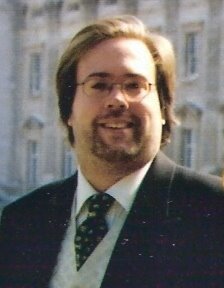
It could be an exaggeration to call two men a dynasty, but they're not far off. Two Karel Růžičkas, one father and one son, one pianist and one saxophonist, two masters of their craft. Růžička sr. is often seen in Prague but it is harder to catch Růžička jr. on this side of the Atlantic. However he will be coming over this summer for a series of shows that are sure to be unmissable, and to get you in the mood here is an interview with the man himself.
PJ: How did your father influence you in becoming a professional musician?
KRjr: In one word - profoundly. I owe my father a huge debt of gratitude for mentoring me and letting me hang around while he was practising and composing. Most of the things I have picked up by simply observing and at times by asking some annoying questions. He also took me to all the jazz festivals and big band rehearsals as a boy. I heard Sonny Rollins and Dexter Gordon before I could read, let alone spell their names. He had Kind of Blue, and Ballads by Trane, and many other records I was able to check out early on. I remember my dad torturing me with "Tune Up" by Miles - I was about 11 years old and played a trumpet at the time. I had to read the melody down and start to figure out the II-VI-I progressions of the tune before I was able to go to to get on my bike to play football in the park with the boys. I was still not sure if I am interested in music that much. After the usual phases of wanting to be a pilot, doctor and even train engineer I have succumbed to the siren call of the muse. And finally all the work has paid off when I fell in love with the saxophone and I never looked back. Thanks dad!
PJ: Who were the Czech jazz musicians who influenced you?
KRjr: Again I must say my father for most part. And all the cats I worked and hung with over the years - Standa Mácha, Jiří Slavíček , Robert Balzar, Najponk, Franta Kop, Štěpán Markovič - really all of them... I am very sorry if I left somebody out.
PJ: Why did you decide to move to the USA?
KRjr: Mainly my boundless curiosity and desire to learn and expand my horizons. At the time I felt I had already "made it" in Prague and whenever I saw any US musicians they encouraged me come overseas. Wynton Marsalis once told me "the only problem you have as a player is that you're not in NYC."
PJ: What is the NYC scene like compared to the Prague scene?
KRjr: There is not really a fair comparison, mainly because NYC is so diverse culturally and all the musicians gravitate towards it and Prague (and most of Europe except London and Paris) is very monocultural. Jazz is like a cultural gumbo and so is NYC. One very positive thing about the Prague scene is that the media attention and the general enthusiasm of the audience is much larger than in the US, where jazz is more on the fringes. It's definitely much easier for a talented artist to get attention of the media in Prague. It all comes down to supply and demand - here in NYC there are thousands of musicians competing for airplay on WBGO, the only mainly jazz radio station in NYC metro area. But in terms of new media, such as the internet and the satellite radio the sky is the limit, the playing field is levelled, and the game has just started a few years ago.
PJ: Do you have any plans to return to CZ?
KRjr: I am returning every year! I love Prague, but I also need to be in NYC with all the movers and shakers at the vanguard of the music. So I am not planning to be based in Prague permanently in the immediate future. But I find it important to keep coming often, maintain a presence and to give back. In mid July I will be teaching a Czech Jazz Workshop in Prague and play a number of dates with my dad and with my fellow Czech expat pianist Pavel Wlosok.
PJ: What are your current plans and ambitions?
KRjr: I am writing a bunch of music I plan to record and release later this year. Also with organist Ondřej Pivec and drummer Russell Carter we started a new group called [CPR] Electrio with influences ranging from jazz, funk to gospel. My long term ambition is to keep nurturing the jazz audience. We need to educate the future generations about this great and unique art form. There tends to be an unnecessary rivalry among various sub genres of jazz. It's important to keep studying the past while incorporating the best of the present. I believe we need to bring jazz into the 21st century and bridge the gap, where there is any, between the generations. Miles Davis and Herbie Hancock come to mind as the true masters of jazz who realised this almost 50 years ago. The music industry has changed dramatically over the past decade. My goal is to make the best of it now and pay it forward, so our kids can enjoy this great music as much as we do.
PJ: What are your best memories of playing in Prague?
KRjr: Oh gosh! There are so many of them... I am sure some of them I don't even remember! Here are just a few; Playing with The Four with Standa Macha, Petr Dvorský and Jirka Slavíček was so much fun. The gig with Roy Hargrove in 1996, when I was invited to sub for Ron Blake. All the gigs with my dad of course. Playing funk gigs with J.A.R. and Monkey Business and rocking out with Michal Pavlíček , Mirek Chyška and Lucie Bílá. Sitting in with my mentor Bob Mintzer and his quartet last year. All I can say is I am so happy and grateful to have all these memories and I am ready to make many more starting this summer.
Many thanks to Karel for taking the time to answer our questions. Do go and visit his websites - http://www.karelruzickajr.com/ and http://www.cprelectrio.com/ - and if you want to catch him in concert here's his current Euro gig diary (all are Karel sr. except the one with Pavel Wlosok):
15.7. - U maleho Glena (Fečo, Šulc)
22.7. - U maleho Glena with Pavel Wlosok
25.7.- Jazz Dock (Fečo, Dano Šoltys)
28.7. - La Boca (my dva duo) gastrojazz
30.7. - Tábor (Kořínek, Smažík)
3.8. - Augsburg (Stock, Bittner)
5.8. - Jazz Dock (Fečo, Šulc)
For our US-based readers you can also catch Karel at any of the following gigs:
June 8 - Sugar Bar in New York, NY [CPR] Electrio
June 24 - The Fillmore, Charlotte NC with Michael Franks
July 8-10 - Yoshi's, Oakland, CA with Michael Franks
August 12 - Aliante Casino, Las Vegas NV with Michael Franks
August 13 - Long Beach Jazz Festival, Long Beach CA with Michael Franks
And finally, some music. Here's a clip of Karel playing one of his own compositions with his dad on piano. Enjoy!
Monday, May 30, 2011


GigTips: June 2011
There are so many jazz gigs in Prague that it would be impossible to list all the good ones, even with careful selection to weed out the routine and the mundane. Instead we offer you a handful of gigs each month that we feel could be of special interest.
If you enjoyed last month's videos of Piňa co. & Lada then you can catch them live at Balbínova poetická hospůdka on 3/6. "Balbínka" is a tiny music club in the heart of the city, and most definitely not a tourist or expat hangout. Acting like a tourist or an expat will win you nothing but curious stares. It's a great little place to see live music and well worth a visit, even if it does have the most miserable barman alive. If you enjoy the Balbinka experience you may want to return there on 17/6 to see Prague's resident Chicago bluesman Rene Trossman.
Should you want to visit another iconic Czech music venue, and indeed see an iconic Czech band, then you can go to Malostranská beseda on 28/6 to see Jan Spálený & ASPM. ASPM are more of a blues outfit, but some of the names associated with the band (Michal Gera, Radek Krampl, Pavel Razím) should be familiar to all local jazz fans.
There are exciting things happening at Jazz Dock in June for fans of great music and great thrift alike. František Uhlíř plays there on 5/6 with KUK (Kagerer/Uhlíř/Knod). František, commonly referred to as "the Paganini of the bass" is one of the legends of the Czech jazz scene and any project that he is involved with is sure to be worth investigating. Jazz Dock will also be acting as a stage for the United Islands of Prague festival, where admission is free and acts include the excellent Matěj Benko Quintet (25/6) and the Kalfus / Doležal Quartet (24/6).
If you're a foot tapping, beard stroking jazz fan who knows when to clap, and you fancy adding some atmosphere to the President's 70th birthday party, then the details of the next Jazz at the Castle are below:

Finally for June, if after reading this month's album review you're keen to experience the Ondřej Štveráček Quartet then they'll be playing at Jazz Time on 9/6 and 14/6.
If you go to any of the gigs listed here please let us know what you thought, and please do tell the venue that you saw the gig tipped on Prague Jazz.
CD Review: What's Outside
Ondřej Štveráček Quartet
 Cube-Metier MJCD21048, 2010
What's Outside is the début album from the Ondřej Štveráček Quartet. Released in 2010, while Prague Jazz was still in hibernation, it caused a stir, pulled in some good reviews, and generally got the name of Ondřej Štveráček thrown about far more than it had been beforehand. He's a busy guy, with regular club dates both here and abroad (Germany, Poland, Slovakia, Hungary and Serbia are on his current schedule) and will be playing as part of the Bohemia Jazz Fest.
His Quartet features the frighteningly young Tomáš Baroš (b), classically trained Ondrej Krajňák (p) and the impressive Marián Ševčík (d). Štveráček wields the tenor sax in a manner that makes comparisons with John Coltrane impossible to avoid. He plays hard in the bebop style, cavorting around the instrument with virtuosity and grace. In the liner notes Jerry Bergonzi states that “his intonation and nuances are impeccable” and that about sums it up. His playing is never clumsy, never less that technically superb. The Quartet are joined by Radek Němejc on assorted percussion devices for three of the nine tracks, who sprinkles his offerings liberally in the background.
“What's Outside” (O. Štveráček) opens the album and is a slice of accelerated bebop. Drums and bass rattle away, tenor sax rises and falls through the scales, seemingly finding a new path every time. There's skimming phrases in unison, an occasional distressed honk and wail, and the whole thing teeters on the edge of control. The energy and intensity of this tune will be repeated often.
“Three For Kate” (O. Štveráček) calms things down slightly. The complexity initially rests with drums and percussion (Němejc is busy) while maturely phrased saxophone glides over the top. The Coltrane moment follows soon though, and again we are given a tour of Štveráček's range.
The album isn't all flash and hyperactivity. “Sasha” (O. Štveráček) is a little slice of after-midnight balladry and brushes, and their interpretation of “Weaver of Dreams” (V. Young) is so light and playful that it seems to belong to another band entirely. Baroš offers up a pretty solo, and the spacier arrangement of the music means that he can be heard more clearly. He's clearly got a lot of talent: the parts are up to scratch, the tone is rich, he's controlled but not too controlled.
Playing like this and not playing any Trane would be just plain disrespectful, and they put together an impressive “Africa” (J. Coltrane). Riffs and patterns fall out of evocative effects and they go for it with a bit of a swagger. Swaggering is something this band does well, as demonstrated on “Dedicated” (O. Štveráček). The longest track on the album, it is also the richest and most interesting of Štveráček's own compositions. A prolonged sweep of an intro, that offers no clue of what is about to come next, opens out into a piano-driven sexy strut, bluesy and full of spirit. It is Krajňák that drives it and keeps it together, also taking his most impressive solo while singing along with himself low in the mix.
It is the influence of bebop that predominates though, with “Out-Sight” (O. Štveráček) being a close but slightly calmer cousin of “What's Outside” and the final blast of “At 10 A.M.”(O. Štveráček) acting as a quick encore. Fire both barrels, solos all round, thank you and goodnight. The sense of the album being a live set is enhanced by the production: stick on a pair of decent cans, close your eyes, and you really could be on the front table, glass in hand, digging the vibe. Prepare to be stared at when you start to clap the solos, especially if you are on a tram at the time. The effect is spoilt only by the fadeout at the end of the otherwise excellent “Out-Sight”. Please don't do that. We like to know how it ends.
An adventurous album then, containing some great playing and some good (occasionally great) writing. It is a demanding listen and not the sort of thing you put on at a dinner party, unless you're like me and want all the dull people to leave. Few compromises and a decent amount of risk. Their gigs and future recordings will be worth following with interest.
Tracklist:
1. WHAT'S OUTSIDE / Ondřej Štveráček / 6:58
2. THREE FOR KATE / Ondřej Štveráček / 4:16
3. DEDICATED / Ondřej Štveráček / 9:57
4. SASHA / Ondřej Štveráček / 3:41
5. OUT-SIGHT / Ondřej Štveráček / 5:35
6. AFRICA / John Coltrane / 8:12
7. GET OUT OF TOWN / Cole Porter / 5:47
8. WEAVER OF DREAMS / Victor Young / 7:55
9. AT 10 A.M. / Ondřej Štveráček / 3:39
Monday, April 25, 2011
Welcome
Hello and welcome to the first edition of the new monthly incarnation of Prague Jazz.
We have kept many features of the original format, such as CD reviews and monthly GigTips. There are a few new ideas though, and I'm very happy that Julian Nicholas agreed to be our first PJ interviewee. We have also selected a couple of interesting videos from the giant bucket of assorted media that is the internet. Do let us know what you would like to see more of on the site.
Because of the monthly format PJ is no longer a good medium for news snippets. We will of course carry major announcements of albums or tours that come our way, but as a device it just does not move fast enough to be an effective news source. As such I hope that as many of you as possible, readers, musicians and record company people alike, use the Prague Jazz Facebook page. So please, fill it up with your news, your press releases, and your thoughts about the Czech jazz scene.
I hope you enjoy the resurrected Prague Jazz website and our May features.
Interview: Julian Nicholas
If you went to see the Emil Viklický Trio in April you may have noticed that there were in fact four musicians on stage. This was because Emil had a special guest with him, saxophonist Julian Nicholas. Julian kindly took the time to tell Prague Jazz a little about his experiences with Emil and the Czech jazz scene. We started by asking him how he first met one of the legends of Central European jazz...
“I met Emil in Wales. We were both teaching on a Jazz Summer School and played in the 'club' in the evenings, finding a mutuality in our music that could be said to emerge from 'folk'-ish expression, and perhaps a Jarret-Gabarek ECM background. Emil invited the drummer David Wickins and myself to come and teach on the Frydlant Jazz School and play some gigs.
“My greatest regret over the years is that I haven't been able to reciprocate with engagements in the UK the kind of situations that Emil has set up for so many of us in the Czech Republic, but next year I will be freer to promote myself in the UK and work towards making things happen for us there too. Last year we recorded a duo concert in Leipzig, and I believe the promoter may be open to the idea of us forming an international quartet there next time, but generally the plans are improvised like the music. Opportunity provides...
The Czech jazz scene not only has a significant heritage of world class artists, but continues to produce them through inspiring young players to go to college and gig a wide range of styles. However, it would be foolish to pretend that it doesn't suffer from all the same syndromes as every jazz scene the world over: clubs with a reputation and tourist interest not paying enough or knowing or caring enough, no real media coverage or airtime, no record company or publisher business development support, and film and television companies not distinguishing between the real thing and potted clichés. Therefore musicians are forced to exist in cliques or sub-scenes, often pressured to compete with one another instead of pooling resources and working together to combat the anti-jazz exploitative capitalism of the media, some clubs, and the so-called “commercial music scene”. But the upside is that there is, deep down, in most of Europe, Scandinavia, Japan and the United States, a culture of respect for the artistic endeavours and heritage of the Jazz Artist that hasn't survived in mainstream culture in the UK. It still exists in the Czech Republic.
“For example, on Friday we played at the festival in Polička, a small town that has hosted jazz musicians annually for 15 years, and has consequently enriched its local people with a greater understanding of the wide range of music under the jazz umbrella, bringing them together in a unique and very different atmosphere than 'pop' and classical musics can achieve.
“My memories of playing in the Czech Republic are rich with magic moments, like recording our album Food Of Love in the atmospheric orchestral [Český rozhlas] broadcasting Studio A in Karlín, all the times Emil has brought together truly individual players from the Czech scene and internationals like Steve Houben and Scott Robinson for tours or the gig at the Castle, and playing Emil's home town gig Olomouc and feeling 'spoilt' by the level of attention. Many more to come, I'm sure...”
Many thanks to Julian for his time and thoughts, and we look forward to seeing him in Prague again soon. For those of you who didn't get to see him play here's a treat – an “official bootleg” video of him in action recorded from the top of Emil's piano at the Polička Jazz Festival. The band are playing one of Julian's own pieces, "1000 Ships".
Subscribe to:
Posts (Atom)