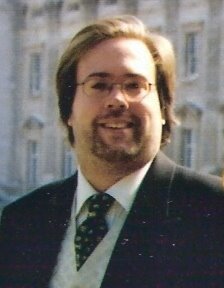
When the Prague Jazz website started one of the most exciting emerging musicians on the local scene was organist Ondřej Pivec. He had that star quality: a young player with technical skill but also a young writer with something to say in his music. He was clearly one of the guys who was going to “make it”, and it was only a matter of time before he headed out into the world to expand his horizons and his musical vocabulary.
Here we catch up with Ondřej’s story in the “city that never sleeps”. No, not Brno. New York, New York.
PJ: Why did you decide to go to NYC and how do you like it there?
OP: The primary idea was to go for about half a year, take lessons, play sessions with people and get better at playing jazz music. From today's point of view it seems like quite a silly idea, as I see that the real learning process takes years or even decades, if you want the outcome to have some kind of value. So overall I really love it - I get to learn so many new things I would never have in Prague.
PJ: How does the NYC scene compare with the Czech scene?
OP: Well, speaking from a jazz perspective, the difference is mainly in the fact that there are more people. So there are more good musicians, more great musicians and more bad musicians. More places to play at, more people to come and listen to etc. which creates a highly competitive environment and therefore a greater level of music. Also, if you are great at what you're doing, there is a chance for you become a member of or play with world renowned bands, which consist of major headliners or as I like to call them "jazz superstars". The prospect of playing with truly amazing musicians keeps everyone motivated and this is something that is unlikely to happen in Prague due to the scale of our jazz community.
Another factor that plays into this is the plethora of musical styles in NYC - something that almost doesn't exist in the Czech Republic. I am very slowly entering the gospel and RnB scene - only realizing the stereotype that "jazz musicians can play everything" is really really off. Especially in today's jazz music scene, when there is not much stress being put on stylistic accuracy and everything is played so "open".
PJ: What do you miss most about playing here, and what is the most enjoyable about playing in NYC?
OP: Well, when I was leaving at the end of 2008, Organic Quartet was in a very good shape and just finally taking off internationally. So it felt a bit sad - after six years of working on a project and leaving it just when the efforts start to pay off. But, I felt a strong need to learn much more about music and the best way I thought to accomplish that would be in NYC, where I would expose myself to new situations, which could lead to great musical learning experience. And that's what I love the most about being in New York - it keeps you on your toes and if you're open to it, you can learn something new every day.
PJ: What are your current projects?
OP: Besides playing for a Harlem gospel church every Sunday, I play every Wednesday at a war veterans' club with a be-bop trio of Jason Marshall (Roy Hargrove's baritone saxophonist) and I've also formed two new projects. One is a funk/fusion trio called CPR (http://www.cprelectrio.com/) and my second project is with an R'n'B cover band (http://www.bandwithoutaband.com/). I am very excited about both groups.
PJ: What are your long term ambitions and plans?
OP: I would love to be musically as versatile as possible, because that allows you to work on many different projects. Soon I want to start writing music again, which I haven't done for nearly two years. Because I took a break to absorb some of the new music I'm being exposed to. It's a never ending process; it seems to me that I'll just have "creative" and "absorbing" eras in my life.
PJ: Do you think you will ever return to CZ permanently?
OP: Currently I see my future here in New York, but like they say: "Never say never"...
PJ: Do you have any suggestions for young musicians who contemplate going abroad for getting more experience?
OP: Yes - do it! Being abroad forces you to adjust to and understand completely different mentalities and cultures, so you begin to understand that your point of view, no matter how strong and valid it is, is just one of many equally valid ones. And the lessons you learn from those experiences are invaluable.
PJ: Is there anything you miss from the Czech Republic that is unavailable in NYC (can be anything, food, things, events, people...)?
OP: I definitely miss my close friends and family members. Sometimes I wouldn't mind having a plate of svíčková or a baked duck witch cabbage and dumplings. Thankfully, they just opened a very good Czech restaurant on the Upper East side of Manhattan a week ago, which I plan to visit every once in a while for a memory of home.
Many thanks to Ondřej for taking the time to talk to us. Best wishes from Prague – we hope to see you here again soon. You can keep up with Ondřej’s work at his website - http://ondrejpivec.com/ - and here’s a clip of him in action. Enjoy!
Sunday, July 3, 2011


GigTips: July 2011
There are so many jazz gigs in Prague that it would be impossible to list all the good ones, even with careful selection to weed out the routine and the mundane. Instead we offer you a handful of gigs each month that we feel could be of special interest.
At AghaRTA Jazz Centrum this month you can catch many of the biggest and most influential names in Czech jazz. Guitar wizard Luboš Andršt will be in action on 10/7 and 11/7, followed by pianist Emil Viklický on 12/7. Trumpeter Michal Gera (30/7) and saxophonist František Kop (5/7) are also playing there, reaffirming AJC’s reputation for quality acts that would be respected on any stage around the world. They will be joined by one of the best young players on the scene, pianist Matěj Benko, on 29/9.
If Latin is your thing then do take the chance to see the Yvonne Sanchez Band at Jazz Dock on 13/7 and 14/7. The Polish-Cuban singer, who received very positive reviews for her My Garden album, is an accomplished performer with an enchanting voice. Another great jazz vocalist is Elena Sonenshine, who recently guested at the President’s birthday concert: she’s at Jazz Dock on 3/7 and at Reduta on 24/7.
Finally, don’t forget our recent interviewees. Karel Růžička jr. is over from NYC in July and you can catch him at any of the following gigs:
15.7. - U Maleho Glena
22.7. - U Maleho Glena
25.7.- Jazz Dock
28.7. - La Boca
Rene Trossman's July gigs are listed at the bottom of his interview earlier in this edition.
If you go to any of the gigs listed here please let us know what you thought, and please do tell the venue that you saw the gig tipped on Prague Jazz.
Monday, May 30, 2011
The View From The Front Row - June 2011
Greetings, and welcome to the June edition of the new monthly Prague Jazz. We have been overwhelmed by your positive feedback to the restoration of the site: it is great to know that it is read and appreciated around the world. There’s a big pile of overdue emails staring at me and I will be answering them soon. Your comments and your own stories of the Czech jazz scene are always welcome.
Czech jazz not only reaches out internationally to music fans but also to musicians, and we were surprised and delighted to get a message from US pianist, composer and writer Jack Reilly. A leading expert on the work of Bill Evans he’s also familiar with Emil Viklický’s playing and hopes to include the Czech Republic in his European tour next year. Do take a look at his website - http://www.jackreillyjazz.com/ - it links to a lot of free music.
Jazz can be a visual art as well, and if you have any doubt about that please take a little time to appreciate the work of photographer Patrick Marek. There are extensive collections of his work on his website - http://www.jazzrock.cz/ - and until 12/6 you can see some of his best photographs exhibited in Café Lucerna. The opening of his exhibition was a veritable Who’s Who of the Prague Jazz world, with many top talents coming to celebrate the event.
The saddest news in May was the confirmed death of the Old Lady. For reasons that are not entirely clear U Staré Paní (USP) Jazz Lounge is no more. She will be missed by music fans and performers alike.
In June’s edition we go heavy on saxophone jazz, featuring an interview with Karel Růžička jr. in which we learn what it was like growing up under the guidance of Karel sr., and also a review of the recent album by the Ondřej Štveráček Quartet. We also have a very special gig review, direct from the hallowed halls of Prague Castle, and of course our regular recommendations for the month ahead.
Enjoy this site, enjoy the music, and we will be back in a month with the July edition. If you can’t wait that long then please join our Facebook page, or follow @tonyemmerson on Twitter.
Gig Review: Tribute to Miles Davis (Jazz na Hradě)
 |
| Bigger than a normal jazz club. |
23rd May 2011
In Prague there are many places to experience live jazz. There are the clubs of course, heavily documented on this website and a magnet for tourists from around the world. And there are the restaurants where good musicians play for bad audiences and what should be a painting becomes little more than wallpaper. There's Czech Radio's Studio A where you can listen to Big Band concerts and feel decades of Czech music history. You can stand on Charles Bridge and listen to some buskers. Or you can go to Prague Castle and have top international jazz stars introduced by the President.
The Jazz na Hradě (Jazz at the Castle) concerts are no ordinary events. They are played in majestic rooms, such as the ornate Španělský sál (Spanish hall), in front of large audiences. Splendid surroundings deserve splendid musicians, and the Castle concerts are known for bringing together the cream of Czech and international talent. This time the honour of representing the home-grown species fell to pianist Emil Viklický, assisted by Jaroslav Jakubovič (a 1968 émigré currently living in NYC) on baritone saxophone. On the international team were Lenny White (d), who previously played with Davis, Corea, Getz and many others, Jon Faddis (t.) and Tom Barney (b). Barney also played with Davis, as well as with Hancock, Gillespie, Aretha Franklin and many rock acts including Clapton and Steely Dan.
The stage was set, in this case a temporary stage in a 17th century state room rarely open to the public. The audience gathered: a hefty slab of VIPs as was to be expected, a fair collection of musicians (Jiří Stivín easily identifiable in his hat, Elena Sonenshine sitting near the front, Ondřej Hejma in a military-styled suit), and of course the ordinary music fans. There was still room for us, and getting to the Castle early meant being able to get a good view and comfortable chairs; important at a concert performance without breaks.
The music was all Miles: either his own compositions or pieces that he recorded. After a short introduction by President Klaus they kicked off with “Ah-Leu-Cha" (C. Parker), following it up with “Some Day My Prince Will Come” (F. Churchill). Different sides of the band, just as there were different sides to Miles. The first a hard-bopping rapid-fire blaze, the second more lyrical, moody and (in terms of trumpet) muted. Faddis himself admitted that it was no easy for a job for a trumpeter, paying tribute to the man who had done so much to define the sound of modern jazz, but he did an excellent job. During “Some Day” his playing was fluid, caressing and coaxing the melody into existence; during the harder sections he made the instrument wail and cry.
“Summertime” (G. Gershwin) mixed things up: the familiar legato lines giving way to trumpet improvisations, while Emil added a touch of boogie-woogie underneath before taking his turn in the spotlight. His evocative bitter-sweet sound perfectly suited the song, and got a well deserved round of applause from the audience.
Ah... the audience. They were there too, perfectly behaved, perfectly mannered, looking like they'd all had a shower and a shave and were ready to say hello to the President. They were appreciative, or certainly wanted to be, and if someone set them off clapping in the right place they followed obediently. They were perfectly silent, essential for recording (all the Jazz at the Castle gigs are recorded) and good for my blood pressure. But a survey of heads and feet revealed few foot tappers, few rhythmic nodders, few beard strokers, few wry smilers. There were some. More would be better.
“'Round Midnight” (T. Monk) and “All Blues” (M. Davis) were very much familiar territory for Viklický, both being played regularly by his own Trio. The potential power of this ensemble finally broke through: brutal stabs and a menacing “All Blues” throughout which Barney's bass vamps beat like a pulse. Faddis may have introduced it as an example of the calmer side of Miles but this was a simmering interpretation, aided and abetted by the obedient listeners. One by one the players took their solos and dropped out , eventually leaving nothing but the ever-present bass against a backdrop of silence. No chatter, no chewing of salt peanuts, no camera flash and whir. A blank canvas on which a sparse pattern could be drawn. Just how it should be.
Lenny White was continually present, but tastefully so. When you've got his history there's nothing to be proved by unnecessary egotism, and throughout the concert he pitched it expertly. Shifting, dropping beats, playing around: he should have been the main inspiration for wry smiles exchanged between foot tapping beard strokers. A class act through and through he shone on “Bye Bye Blackbird” (R. Henderson), and when he finally took a full solo during “Walkin'” (R. Carpenter) it was worth the wait. The echo of the room added extra thunder as he worked his way around the kit. By the time he had finished even the suits knew they should go wild. Jakubovič also had his finest moment, growling through the bottom notes with a richness that makes you wish that more saxophonists would put down the ubiquitous tenor and go low.
The finale brought lots of flowers and photos with Klaus, and a final blast of “Milestones” (M. Davis) to complete 90 minutes of music, most of which will presumably emerge on a Jazz na Hradě album in the coming months. It wasn't an evening of cutting-edge far-out creation, and I (and perhaps about fifty other people in the room) would have liked to have heard some more esoteric numbers from the Davis repertoire. But we should not forget that this was a one-off, not a regularly gigging band, and so it was always going to err on the side of orthodoxy. What they did do they did very well, and it is always a joyous moment for a lover of Czech jazz to see local artists demonstrating clearly that they can hold their own alongside so much globally-recognised talent.
The Jazz na Hradě experience is not for everyone. Specifically it is not for people who want musical wallpaper. It is a listening concert. The Corridors (or in this case Halls) Of Power do not have the greatest acoustics in the world, but I've heard a lot worse and it is made up for by the lack of distraction. To all the foot tappers, rhythmic nodders, beard strokers and wry smilers out there who have never been, this is your call to arms. If you can stand to wear semi-smart clothing please join me. Let us march en masse to these gigs and help the VIPs time their applause. Jazz fans – to the Castle!
Interview: Karel Růžička jr.
It could be an exaggeration to call two men a dynasty, but they're not far off. Two Karel Růžičkas, one father and one son, one pianist and one saxophonist, two masters of their craft. Růžička sr. is often seen in Prague but it is harder to catch Růžička jr. on this side of the Atlantic. However he will be coming over this summer for a series of shows that are sure to be unmissable, and to get you in the mood here is an interview with the man himself.
PJ: How did your father influence you in becoming a professional musician?
KRjr: In one word - profoundly. I owe my father a huge debt of gratitude for mentoring me and letting me hang around while he was practising and composing. Most of the things I have picked up by simply observing and at times by asking some annoying questions. He also took me to all the jazz festivals and big band rehearsals as a boy. I heard Sonny Rollins and Dexter Gordon before I could read, let alone spell their names. He had Kind of Blue, and Ballads by Trane, and many other records I was able to check out early on. I remember my dad torturing me with "Tune Up" by Miles - I was about 11 years old and played a trumpet at the time. I had to read the melody down and start to figure out the II-VI-I progressions of the tune before I was able to go to to get on my bike to play football in the park with the boys. I was still not sure if I am interested in music that much. After the usual phases of wanting to be a pilot, doctor and even train engineer I have succumbed to the siren call of the muse. And finally all the work has paid off when I fell in love with the saxophone and I never looked back. Thanks dad!
PJ: Who were the Czech jazz musicians who influenced you?
KRjr: Again I must say my father for most part. And all the cats I worked and hung with over the years - Standa Mácha, Jiří Slavíček , Robert Balzar, Najponk, Franta Kop, Štěpán Markovič - really all of them... I am very sorry if I left somebody out.
PJ: Why did you decide to move to the USA?
KRjr: Mainly my boundless curiosity and desire to learn and expand my horizons. At the time I felt I had already "made it" in Prague and whenever I saw any US musicians they encouraged me come overseas. Wynton Marsalis once told me "the only problem you have as a player is that you're not in NYC."
PJ: What is the NYC scene like compared to the Prague scene?
KRjr: There is not really a fair comparison, mainly because NYC is so diverse culturally and all the musicians gravitate towards it and Prague (and most of Europe except London and Paris) is very monocultural. Jazz is like a cultural gumbo and so is NYC. One very positive thing about the Prague scene is that the media attention and the general enthusiasm of the audience is much larger than in the US, where jazz is more on the fringes. It's definitely much easier for a talented artist to get attention of the media in Prague. It all comes down to supply and demand - here in NYC there are thousands of musicians competing for airplay on WBGO, the only mainly jazz radio station in NYC metro area. But in terms of new media, such as the internet and the satellite radio the sky is the limit, the playing field is levelled, and the game has just started a few years ago.
PJ: Do you have any plans to return to CZ?
KRjr: I am returning every year! I love Prague, but I also need to be in NYC with all the movers and shakers at the vanguard of the music. So I am not planning to be based in Prague permanently in the immediate future. But I find it important to keep coming often, maintain a presence and to give back. In mid July I will be teaching a Czech Jazz Workshop in Prague and play a number of dates with my dad and with my fellow Czech expat pianist Pavel Wlosok.
PJ: What are your current plans and ambitions?
KRjr: I am writing a bunch of music I plan to record and release later this year. Also with organist Ondřej Pivec and drummer Russell Carter we started a new group called [CPR] Electrio with influences ranging from jazz, funk to gospel. My long term ambition is to keep nurturing the jazz audience. We need to educate the future generations about this great and unique art form. There tends to be an unnecessary rivalry among various sub genres of jazz. It's important to keep studying the past while incorporating the best of the present. I believe we need to bring jazz into the 21st century and bridge the gap, where there is any, between the generations. Miles Davis and Herbie Hancock come to mind as the true masters of jazz who realised this almost 50 years ago. The music industry has changed dramatically over the past decade. My goal is to make the best of it now and pay it forward, so our kids can enjoy this great music as much as we do.
PJ: What are your best memories of playing in Prague?
KRjr: Oh gosh! There are so many of them... I am sure some of them I don't even remember! Here are just a few; Playing with The Four with Standa Macha, Petr Dvorský and Jirka Slavíček was so much fun. The gig with Roy Hargrove in 1996, when I was invited to sub for Ron Blake. All the gigs with my dad of course. Playing funk gigs with J.A.R. and Monkey Business and rocking out with Michal Pavlíček , Mirek Chyška and Lucie Bílá. Sitting in with my mentor Bob Mintzer and his quartet last year. All I can say is I am so happy and grateful to have all these memories and I am ready to make many more starting this summer.
Many thanks to Karel for taking the time to answer our questions. Do go and visit his websites - http://www.karelruzickajr.com/ and http://www.cprelectrio.com/ - and if you want to catch him in concert here's his current Euro gig diary (all are Karel sr. except the one with Pavel Wlosok):
15.7. - U maleho Glena (Fečo, Šulc)
22.7. - U maleho Glena with Pavel Wlosok
25.7.- Jazz Dock (Fečo, Dano Šoltys)
28.7. - La Boca (my dva duo) gastrojazz
30.7. - Tábor (Kořínek, Smažík)
3.8. - Augsburg (Stock, Bittner)
5.8. - Jazz Dock (Fečo, Šulc)
For our US-based readers you can also catch Karel at any of the following gigs:
June 8 - Sugar Bar in New York, NY [CPR] Electrio
June 24 - The Fillmore, Charlotte NC with Michael Franks
July 8-10 - Yoshi's, Oakland, CA with Michael Franks
August 12 - Aliante Casino, Las Vegas NV with Michael Franks
August 13 - Long Beach Jazz Festival, Long Beach CA with Michael Franks
And finally, some music. Here's a clip of Karel playing one of his own compositions with his dad on piano. Enjoy!
Subscribe to:
Posts (Atom)